


Natural Blue™ Latex Gloves
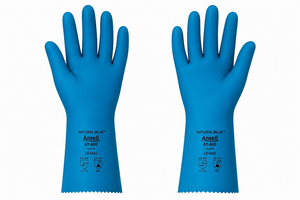
- Material: Natural Rubber Latex
- Color: Blue
- Available Sizes: 8, 9, and 10
- Packaging: 12 Pairs (1 Dozen) Per Order
- Applications: Industrial Handling, Maintenance, Cleaning, and General Hand Protection

Natural Blue Latex Gloves Product Comparison Chart
Natural Blue Latex Glove Configurations Natural Blue Latex Gloves are available in sizes 8, 9, and 10, with each size offered as a separate product sold by the dozen. Multiple glove sizes allow businesses to accommodate different hand dimensions across industrial workplaces. Natural rubber latex construction provides flexibility and elasticity for tasks requiring finger movement and gripping ability. Proper glove sizing helps maintain dexterity and reduces excess material that could interfere with equipment handling. Before purchasing, confirm glove length, thickness, cuff design, and reusable or disposable classification using the manufacturer's specifications.
Natural Rubber Latex Material Properties Natural rubber latex is an elastic polymer material commonly used in protective glove manufacturing. Its flexibility allows the glove to conform to the hand while permitting movement during manual tasks. Latex provides resistance to certain substances, but chemical performance depends on material thickness, construction, and exposure conditions. Natural rubber latex is not suitable for every solvent, oil, or industrial chemical. Manufacturers evaluate chemical resistance using testing methods that measure permeation, penetration, and degradation. These characteristics should be reviewed before using latex gloves with hazardous substances. Natural rubber latex proteins may cause allergic reactions. Workers with latex sensitivity should use suitable alternatives, such as nitrile gloves.
Workplace Safety Standards and Compliance\OSHA 29 CFR 1910.138 requires employers to select and provide appropriate hand protection when employees face hazards involving chemical absorption, cuts, abrasions, punctures, and thermal exposure.Glove performance may be evaluated using standards such as ANSI/ISEA 105 for mechanical protection and applicable ASTM methods for chemical resistance.Compliance with a particular standard must be confirmed through the manufacturer's published technical data. Natural rubber latex construction alone does not establish a specific protection rating.For food-handling applications, verify applicable FDA food-contact requirements and product documentation before use.
Industrial Applications for Latex Gloves Natural Blue Latex Gloves may be used in industrial environments where their documented protection characteristics match the work being performed. General maintenance applications can include handling tools, equipment components, and materials that do not present hazards beyond the glove's rated performance. Manufacturing operations may require gloves for assembly, inspection, and routine material handling. Cleaning applications require verification of compatibility with the specific cleaning chemicals. Laboratory or food-processing use should be limited to tasks supported by the manufacturer's chemical-resistance and food-contact documentation. Latex gloves should not be selected for welding, high-temperature handling, electrical hazards, or sharp-edge protection without appropriate verified ratings.
Selecting Natural Blue Latex Glove Sizes Natural Blue Latex Gloves are offered in sizes 8, 9, and 10. Workers should determine the appropriate size using hand measurements and the manufacturer's sizing chart. Gloves that are too small may restrict movement or place stress on the material. Oversized gloves can reduce grip control and interfere with detailed work. Buyers ordering for multiple employees should account for individual sizing requirements and expected glove consumption.
Glove Inspection, Storage, and Handling Gloves should be inspected before use for visible tears, holes, brittleness, or deterioration. Gloves showing damage should be replaced. Natural rubber latex can deteriorate through prolonged exposure to sunlight, ozone, excessive heat, and incompatible chemicals. Store gloves according to manufacturer recommendations and avoid contact with substances that may weaken the material. For chemical-handling applications, follow established procedures for glove removal, cleaning where permitted, and replacement to limit contamination.
| Product | Material | Size | Color | Packaging |
|---|---|---|---|---|
| Natural Blue Latex Gloves Size 8 | Natural Rubber Latex | 8 | Blue | 1 Dozen |
| Natural Blue Latex Gloves Size 9 | Natural Rubber Latex | 9 | Blue | 1 Dozen |
| Natural Blue Latex Gloves Size 10 | Natural Rubber Latex | 10 | Blue | 1 Dozen |
Natural Blue Latex Glove Configurations Natural Blue Latex Gloves are available in sizes 8, 9, and 10, with each size offered as a separate product sold by the dozen. Multiple glove sizes allow businesses to accommodate different hand dimensions across industrial workplaces. Natural rubber latex construction provides flexibility and elasticity for tasks requiring finger movement and gripping ability. Proper glove sizing helps maintain dexterity and reduces excess material that could interfere with equipment handling. Before purchasing, confirm glove length, thickness, cuff design, and reusable or disposable classification using the manufacturer's specifications.
Natural Rubber Latex Material Properties Natural rubber latex is an elastic polymer material commonly used in protective glove manufacturing. Its flexibility allows the glove to conform to the hand while permitting movement during manual tasks. Latex provides resistance to certain substances, but chemical performance depends on material thickness, construction, and exposure conditions. Natural rubber latex is not suitable for every solvent, oil, or industrial chemical. Manufacturers evaluate chemical resistance using testing methods that measure permeation, penetration, and degradation. These characteristics should be reviewed before using latex gloves with hazardous substances. Natural rubber latex proteins may cause allergic reactions. Workers with latex sensitivity should use suitable alternatives, such as nitrile gloves.
Workplace Safety Standards and Compliance\OSHA 29 CFR 1910.138 requires employers to select and provide appropriate hand protection when employees face hazards involving chemical absorption, cuts, abrasions, punctures, and thermal exposure.Glove performance may be evaluated using standards such as ANSI/ISEA 105 for mechanical protection and applicable ASTM methods for chemical resistance.Compliance with a particular standard must be confirmed through the manufacturer's published technical data. Natural rubber latex construction alone does not establish a specific protection rating.For food-handling applications, verify applicable FDA food-contact requirements and product documentation before use.
Industrial Applications for Latex Gloves Natural Blue Latex Gloves may be used in industrial environments where their documented protection characteristics match the work being performed. General maintenance applications can include handling tools, equipment components, and materials that do not present hazards beyond the glove's rated performance. Manufacturing operations may require gloves for assembly, inspection, and routine material handling. Cleaning applications require verification of compatibility with the specific cleaning chemicals. Laboratory or food-processing use should be limited to tasks supported by the manufacturer's chemical-resistance and food-contact documentation. Latex gloves should not be selected for welding, high-temperature handling, electrical hazards, or sharp-edge protection without appropriate verified ratings.
Selecting Natural Blue Latex Glove Sizes Natural Blue Latex Gloves are offered in sizes 8, 9, and 10. Workers should determine the appropriate size using hand measurements and the manufacturer's sizing chart. Gloves that are too small may restrict movement or place stress on the material. Oversized gloves can reduce grip control and interfere with detailed work. Buyers ordering for multiple employees should account for individual sizing requirements and expected glove consumption.
Glove Inspection, Storage, and Handling Gloves should be inspected before use for visible tears, holes, brittleness, or deterioration. Gloves showing damage should be replaced. Natural rubber latex can deteriorate through prolonged exposure to sunlight, ozone, excessive heat, and incompatible chemicals. Store gloves according to manufacturer recommendations and avoid contact with substances that may weaken the material. For chemical-handling applications, follow established procedures for glove removal, cleaning where permitted, and replacement to limit contamination.

