


Rubbermaid Heavy-Duty Utility Service Carts
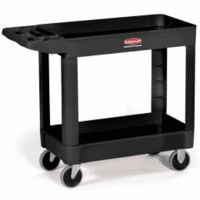
- Material Composition: Molded structural resin utility cart construction.
- Size Range: 39 x 17 x 33 in. to 55 x 26 x 33 in.
- Configuration: Two-shelf service cart designs.
- Use Type: Material handling, maintenance, janitorial, warehouse, and facility transport.
- Mobility: Rolling cart platform for moving tools, supplies, parts, and equipment.

| Buy More, Save More! | ||
|---|---|---|
| Quantity | Price Each | |
| 1 - 11 pieces | $196.95 ea. | |
| 12+ pieces | $177.33 ea. | |
| Buy More, Save More! | ||
|---|---|---|
| Quantity | Price Each | |
| 1 - 11 pieces | $225.95 ea. | |
| 12+ pieces | $203.41 ea. | |
Product Comparison Chart
| Product | Configuration | Dimensions | Primary Use | Typical Application |
|---|---|---|---|---|
| Rubbermaid Heavy-Duty Utility Service Cart | 2 Shelf | 39 x 17 x 33 in. | Compact material transport | Offices, schools, maintenance rooms, narrow aisles |
| Rubbermaid Heavy-Duty Utility Service Cart | 2 Shelf | 45 x 25 x 33 in. | General facility transport | Janitorial, warehouse, maintenance, parts movement |
| Rubbermaid Heavy-Duty Utility Service Cart | 2 Shelf | 55 x 26 x 33 in. | Larger shelf-area transport | Bulk supplies, cartons, equipment, warehouse support |
Two-Shelf Utility Cart Configuration
Rubbermaid heavy-duty utility service carts in this section use a two-shelf design for general-purpose transport. The upper shelf provides access to tools, small containers, cleaning supplies, packages, or work materials that need to remain within reach. The lower shelf increases total storage area and supports larger items, backup supplies, cartons, or maintenance equipment. A two-shelf configuration is commonly used where workers need to move several types of material at one time without using a pallet jack, dolly, or hand truck. This layout is suitable for building maintenance routes, janitorial supply movement, light warehouse picking, office supply delivery, foodservice support, and parts transport.
Size and Platform Analysis
The available cart sizes cover compact, medium, and larger service cart formats. The 39 x 17 x 33 inch cart is suited for tighter aisles, smaller rooms, offices, schools, and maintenance areas where turning space is limited. The 45 x 25 x 33 inch cart provides a larger platform for facilities that need more shelf area while still maintaining general maneuverability. The 55 x 26 x 33 inch cart provides expanded shelf length for bulkier loads, larger cartons, equipment cases, or higher-volume material movement. Buyers should compare cart dimensions against aisle width, doorway clearance, elevator access, storage space, and the typical size of items being transported.
Material Construction and Cart Body Design
These utility service carts use molded resin construction rather than painted metal. Resin cart bodies resist rust, peeling, and corrosion in damp or washdown-prone environments. This material is commonly used in commercial service carts because it reduces surface maintenance and helps prevent damage from minor impacts during daily use. Molded shelves provide a continuous surface for carrying supplies, tools, and containers. The cart body should be selected based on expected load weight, chemical exposure, floor surface, and cleaning requirements. For facilities handling liquids or cleaning chemicals, buyers should confirm compatibility between the cart material and the products being transported.
Mobility and Facility Use
Heavy-duty service carts are used where workers need to move materials repeatedly through a facility. Common departments include maintenance, janitorial, warehouse operations, shipping areas, receiving departments, schools, hospitals, hotels, manufacturing plants, and foodservice operations. The rolling design reduces manual carrying and allows one worker to move multiple items in a single trip. Cart performance depends on floor conditions, load distribution, and turning space. Smooth concrete, tile, and finished commercial floors generally allow easier movement than uneven exterior surfaces. Loads should be balanced across the shelves to reduce tipping risk and improve steering control.
Industrial and Commercial Applications
In maintenance departments, these carts can carry hand tools, replacement parts, lubricants, fasteners, electrical supplies, and repair materials. In janitorial service, they can move chemicals, towels, liners, paper products, and restroom supplies. In warehouses, the carts support order picking, small parts movement, packaging supply transport, and restocking work areas. In schools, offices, and institutions, they can move mail, records, AV equipment, kitchen supplies, or event materials. In foodservice and healthcare environments, molded resin construction is useful where carts may need frequent cleaning, though buyers should confirm all sanitation and facility-specific requirements before use.
Selection Criteria for Buyers
The main selection factors are cart size, shelf area, load type, aisle clearance, storage location, floor surface, and cleaning requirements. A smaller 39 x 17 x 33 inch cart is practical where maneuverability matters more than carrying volume. A 45 x 25 x 33 inch cart provides more working surface for general facility use. A 55 x 26 x 33 inch cart is suited for larger loads or longer items that need more shelf space. Buyers should also evaluate whether the cart will carry liquids, chemicals, heavy tools, cartons, or mixed supplies. Weight should be distributed evenly, and items should not extend beyond the cart footprint during movement.

