


HiPower Tumbler Drum Mixers | Industrial Mixing Equipment
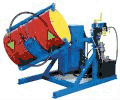
- Material Composition: Heavy-gauge carbon steel frames with powder-coated finishes.
- Capacity Range: Designed for standard 55-gallon (210-liter) steel, plastic, or fiber drums.
- Power Options: TEFC (Totally Enclosed Fan Cooled) Electric and Air-Powered (Pneumatic) motors.
- Operation Type: Tilt-to-load and vertical-load tumbler configurations.
HiPower Tumbler Drum Mixers are engineered for heavy-duty industrial blending, specifically designed to rotate 55-gallon drums to ensure the homogenization of contents. These systems eliminate the need for internal paddles by utilizing the drum itself as the mixing vessel, which prevents contamination and reduces cleanup requirements. The product line includes high-torque TEFC electric motors for consistent power delivery and pneumatic air-powered models for environments requiring explosion-proof specifications. These mixers accommodate various drum materials, including steel and plastic, providing a versatile solution for chemical processing, paint manufacturing, and agricultural applications requiring sediment suspension or liquid-to-liquid blending.

$13,499.98
$15,000.00
(You Save 10%)Product Comparison Table
Tilt-to-Load vs. Fixed Position Mixing HiPower drum mixers are categorized by their loading mechanisms and rotational axis. The tilt-to-load configuration utilizes a hydraulic or manual jack system that allows the operator to secure a drum at floor level before elevating it into the mixing position. This design reduces physical strain and minimizes the risk of drum damage during the loading process. Once secured, the tumbler rotates the drum end-over-end, a motion that facilitates "corner-to-corner" mixing. This aggressive agitation is necessary for high-viscosity fluids or materials with heavy sediment that settles at the bottom of the container.
Frame Construction and Motor Specifications The structural integrity of HiPower mixers is derived from reinforced carbon steel tubing and plate, designed to withstand the centrifugal forces generated by a 1,000-lb rotating load. The motor housing for electric models features a TEFC (Totally Enclosed Fan Cooled) rating, protecting internal components from dust and moisture. For hazardous locations where electrical sparks pose a combustion risk, pneumatic air motors are employed. These motors utilize compressed air to generate torque, offering variable speed control and cool operation under continuous load. All frames are finished with industrial-grade powder coating to resist chemical splashes and environmental corrosion.
Safety Compliance and Operational Ratings Industrial drum tumblers must adhere to specific OSHA and ANSI standards regarding machinery lubrication, guarding, and emergency stop mechanisms. HiPower units are designed to integrate with safety enclosures; these interlocked cages prevent the mixer from operating while the gate is open, mitigating the risk of impact or entanglement. While the drums themselves often carry UN Ratings (e.g., 1A1 or 1A2) for transport, the mixing equipment is rated based on its load capacity and duty cycle. Ensuring that the mixer’s weight rating exceeds the maximum density of the drum contents is a requirement for maintaining compliance with workplace safety regulations.
Sector-Specific Utility In the chemical industry, these tumblers are used for re-suspending settled pigments in coatings and inks. The food and beverage sector utilizes stainless-steel compatible tumblers for blending dry ingredients or additives directly within food-grade liners. In agricultural contexts, HiPower mixers are used for the preparation of bulk pesticides and fertilizers where uniform chemical distribution is critical for efficacy. Because the mixing occurs within a sealed drum, these units are also preferred in the waste management sector for stabilizing hazardous sludge with reagents before disposal, as it prevents the release of volatile organic compounds (VOCs) into the atmosphere.
Technical Integration Factors When selecting a HiPower tumbler, the primary technical factor is the power source compatibility. Electric TEFC motors require specific voltage and phase configurations (typically 230/460V, 3-phase). Conversely, air-powered models require a consistent CFM (cubic feet per minute) at a specific PSI to maintain rated RPM. Buyers must also evaluate the drum type; fiber drums may require additional reinforcement or specific "saddle" adapters to prevent sidewall collapse during the tumbling cycle. Chemical compatibility of the mixer’s finish with the facility's ambient environment should also be assessed to prevent long-term structural degradation.
| Product Name | Motor Type | Loading Style | Price | Status |
|---|---|---|---|---|
| TEFC - Powerful Tumbler Tilt-to-load Drum Mixer | Electric (TEFC) | Tilt-to-Load | $14,327.24 | Out of Stock |
| Air - Powerful Tumbler Drum Mixer | Pneumatic (Air) | Standard Load | $13,499.98 | In Stock |
Tilt-to-Load vs. Fixed Position Mixing HiPower drum mixers are categorized by their loading mechanisms and rotational axis. The tilt-to-load configuration utilizes a hydraulic or manual jack system that allows the operator to secure a drum at floor level before elevating it into the mixing position. This design reduces physical strain and minimizes the risk of drum damage during the loading process. Once secured, the tumbler rotates the drum end-over-end, a motion that facilitates "corner-to-corner" mixing. This aggressive agitation is necessary for high-viscosity fluids or materials with heavy sediment that settles at the bottom of the container.
Frame Construction and Motor Specifications The structural integrity of HiPower mixers is derived from reinforced carbon steel tubing and plate, designed to withstand the centrifugal forces generated by a 1,000-lb rotating load. The motor housing for electric models features a TEFC (Totally Enclosed Fan Cooled) rating, protecting internal components from dust and moisture. For hazardous locations where electrical sparks pose a combustion risk, pneumatic air motors are employed. These motors utilize compressed air to generate torque, offering variable speed control and cool operation under continuous load. All frames are finished with industrial-grade powder coating to resist chemical splashes and environmental corrosion.
Safety Compliance and Operational Ratings Industrial drum tumblers must adhere to specific OSHA and ANSI standards regarding machinery lubrication, guarding, and emergency stop mechanisms. HiPower units are designed to integrate with safety enclosures; these interlocked cages prevent the mixer from operating while the gate is open, mitigating the risk of impact or entanglement. While the drums themselves often carry UN Ratings (e.g., 1A1 or 1A2) for transport, the mixing equipment is rated based on its load capacity and duty cycle. Ensuring that the mixer’s weight rating exceeds the maximum density of the drum contents is a requirement for maintaining compliance with workplace safety regulations.
Sector-Specific Utility In the chemical industry, these tumblers are used for re-suspending settled pigments in coatings and inks. The food and beverage sector utilizes stainless-steel compatible tumblers for blending dry ingredients or additives directly within food-grade liners. In agricultural contexts, HiPower mixers are used for the preparation of bulk pesticides and fertilizers where uniform chemical distribution is critical for efficacy. Because the mixing occurs within a sealed drum, these units are also preferred in the waste management sector for stabilizing hazardous sludge with reagents before disposal, as it prevents the release of volatile organic compounds (VOCs) into the atmosphere.
Technical Integration Factors When selecting a HiPower tumbler, the primary technical factor is the power source compatibility. Electric TEFC motors require specific voltage and phase configurations (typically 230/460V, 3-phase). Conversely, air-powered models require a consistent CFM (cubic feet per minute) at a specific PSI to maintain rated RPM. Buyers must also evaluate the drum type; fiber drums may require additional reinforcement or specific "saddle" adapters to prevent sidewall collapse during the tumbling cycle. Chemical compatibility of the mixer’s finish with the facility's ambient environment should also be assessed to prevent long-term structural degradation.

