


Fillers & Packers | Industrial Liquid Filling Systems
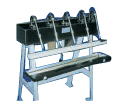
- Material Composition: 304 and 316 Stainless Steel, HDPE, PTFE-lined components.
- Capacity Range: 1-Pint containers to 55-Gallon industrial drums and IBC totes.
- Compliance/Ratings: CE-Certified, ATEX Explosion-Proof (Ex-rated), and Food-Grade (FDA) configurations.
- Closure Types: Compatible with threaded bungs, snap-on caps, and various nozzle diameters.

| Product Name | Filling Mechanism | Container Range | Primary Material |
|---|---|---|---|
| Top Quality Automatic Drum Siphon Filler | Siphon / Gravity | 1 Pint – 1 Gallon | 316 Stainless Steel |
| High-Speed Net Weight Drum Filler | Load Cell / Piston | 15 – 55 Gallon | Carbon Steel / 304 SS |
| Corrosion-Resistant HDPE Filler | Overflow / Gravity | Quarts – 5 Gallon | High-Density Polyethylene |
Technical Filling Configurations Industrial filling systems are categorized by their movement and dispensing method, primarily divided into top-fill, sub-surface, and siphon configurations. Siphon fillers utilize a pressure differential to move liquid from a reservoir to a container, maintaining a consistent level via float valves. Top-fill systems position the nozzle above the container opening and are used for stable, non-foaming liquids. Sub-surface or "bottom-up" fillers insert the nozzle to the base of the container, retracting as the fluid level rises; this method is essential for high-foaming surfactants or volatile chemicals to minimize turbulence and static discharge.
Material Durability and Chemical Resistance The structural integrity of filling machinery depends on its "wetted parts"—components in direct contact with the product. 316 stainless steel is the industry standard for food-grade and pharmaceutical applications due to its resistance to pitting and oxidation. For aggressive acids or bleaches, machines are often constructed from High-Density Polyethylene (HDPE) or feature PTFE (Teflon) linings to prevent metallic contamination and hardware degradation. Gaskets and seals are typically fabricated from Viton or Tygon to ensure leak-proof operation across varying temperature ranges and chemical profiles.
Compliance and Safety Certifications Industrial fillers must adhere to strict safety protocols, particularly when handling hazardous materials. UN-rated systems ensure that the filling process maintains the integrity of shipping containers for DOT-regulated transport. In environments with flammable vapors, equipment must meet ATEX or NEC Class I, Division 1 explosion-proof standards, utilizing pneumatic controls or intrinsically safe electronics. Food-grade fillers comply with FDA and 3-A Sanitary Standards, featuring "Clean-in-Place" (CIP) designs that allow for thorough sterilization without total machine disassembly.
Sector-Specific Use Cases In the chemical industry, fillers are used for the high-volume packaging of solvents, resins, and cleaning agents. The agricultural sector utilizes these systems for the precise measurement of pesticides and liquid fertilizers. Food and beverage processors rely on sanitary-grade packers for oils, syrups, and sauces, where volumetric accuracy prevents product giveaway. Additionally, the automotive sector employs automated drum fillers for lubricants and coolants, requiring high throughput and integration with motorized conveyor lines for 24/7 production cycles.
Technical Factors for Equipment Integration Selecting a filling system requires an analysis of fluid viscosity, measured in centipoise (cP). Low-viscosity fluids like water or solvents are efficiently handled by gravity or siphon fillers, while high-viscosity pastes and heavy oils require positive displacement pumps or piston fillers. Buyers must also consider the required filling accuracy; net-weight systems using load cells offer the highest precision (up to ±0.1%) compared to timed-flow gravity systems. Environmental factors, such as the presence of corrosive fumes or the need for mobile vs. stationary stands, further dictate the necessary coatings and frame materials.

