


Drum Covers and Industrial Barrel Lids | Storage Safety
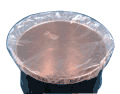
- Material Composition: Polyethylene, Carbon Steel, and Absorbent Cellulose.
- Size Compatibility: 5-Gallon, 30-Gallon, and 55-Gallon standard industrial containers.
- Compliance/Ratings: FM Approved, UL Listed, and NFPA compliant fire-safety models.
- Functional Types: Disposable dust covers, dome tops, and self-closing safety lids.

| Product Name | Primary Material | Application Type | Key Feature |
|---|---|---|---|
| Shower Cap Drum Covers | Polyethylene | Dust/Contamination Protection | Disposable/Elastic Fit |
| Dome Top Drum Covers | Carbon Steel | Weather/Debris Shielding | Outdoor Storage Optimized |
| Fire Safe Drum Covers | Steel | Ignition Mitigation | Self-Closing Mechanism |
| Cease-Fire ฎ Drum Covers | Steel/Aluminum | Fire Suppression | FM Approved Design |
| Drum Water Absorbent Pads | Cellulose/Polymer | Moisture Management | Wic Away Technology |
Industrial Drum Cover Classifications Drum covers are categorized by their mechanical design and intended level of access. Disposable "shower cap" covers utilize an elasticized hem to provide a temporary barrier against dust and particulate matter for both open-head and tight-head drums. Dome top covers feature a high-clearance profile that allows for the storage of drums with protruding bungs or pumps while shedding rainwater and preventing debris accumulation. For high-risk environments, self-closing safety lids utilize spring-loaded or gravity-fed mechanisms to ensure the container remains sealed when not actively being accessed, reducing the release of vapors and preventing accidental spills.
Substrate Properties and Durability The materials used in drum cover construction are selected based on chemical resistance and structural requirements. Polyethylene covers provide a low-cost, chemically inert solution for short-term protection against non-corrosive elements. Metal covers are typically manufactured from heavy-gauge carbon steel with powder-coated finishes to resist oxidation and mechanical impact. In specialized moisture-control applications, absorbent pads utilize high-capacity cellulose or synthetic fibers engineered to draw standing liquid away from the drum head, preventing rust and contamination of the bung openings.
Compliance and Safety Certifications In industrial settings, drum covers must often meet specific regulatory benchmarks to ensure facility safety. Fire-safe covers, such as the Cease-Fireฎ models, are engineered to comply with NFPA (National Fire Protection Association) standards. These lids are FM Approved and UL Listed, indicating they have undergone rigorous testing to prove their ability to extinguish small fires within the drum by restricting oxygen flow. Compliance with OSHA regulations often necessitates the use of these self-closing lids when storing flammable waste or solvent-soaked rags to mitigate fire hazards in the workplace.
Sector-Specific Utility Drum covers are deployed across various sectors including chemical processing, food production, and waste management. In agricultural settings, dome tops protect outdoor-stored fertilizers and lubricants from rain infiltration. Manufacturing facilities utilize fire-safe lids for the collection of combustible debris, such as oily wipes or metal shavings. The food and pharmaceutical industries employ disposable polyethylene covers during internal transport to maintain sanitary conditions and prevent cross-contamination between processing stages.
Technical Integration Factors Selecting the appropriate drum cover requires an evaluation of the storage environment and the physical characteristics of the drum. Compatibility is determined by the drum diameter, typically standardized for 55-gallon (22.5 inches) or 30-gallon containers. Buyers must evaluate the chemical compatibility of the cover material with the drum’s contents, particularly if the cover will be in contact with volatile organic compounds (VOCs). Environmental factors, such as UV exposure or high-temperature zones, dictate whether a reinforced metal dome or a UV-stabilized plastic cover is the necessary technical solution.

