


Wiz-Kid Ratchet Drum Deheaders | Industrial Tools
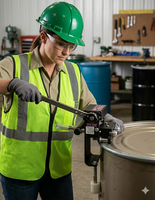
- Material Composition: Ratchet-style manual deheader with steel cutting system; non-ferrous cutting wheel option available.
- Size/Capacity Range: Designed for industrial drum deheading, including standard closed-head steel drums.
- Compliance/Ratings: Intended for higher-volume drum opening; non-ferrous cutting wheels are used where flammable area requirements apply.
- Closure Types: Used to remove sealed tops from closed-head drums and create open-top containers.
- Product Types: Wiz-Kid® ratchet style deheader and non-ferrous cutting wheel.

$2,498.98
$2,800.00
(You Save 11%)$2,288.98
$2,400.00
(You Save 5%)
Product Comparison Chart
Configuration Analysis
Ratchet Style Drum Deheading Configuration Wiz-Kid ratchet style deheaders are configured for higher-volume drum opening where standard hand deheaders may be too slow for weekly production needs. The ratchet mechanism advances the tool around the drum while the cutting wheel removes the sealed top near the upper chime. This design produces a smooth, continuous cut and leaves a hands-safe edge to help reduce cut hazards during handling. The manual ratchet format does not require a fully powered cutting station, but it provides faster operation than economy hand-operated deheaders. It is suited for facilities deheading more than 25 drums per week.
Cutting Wheel and Tool Construction The cutting system is the main wear point on a ratchet style deheader. The tool body must hold the cutting wheel in alignment as the ratchet motion moves around the drum circumference. Standard cutting components are used for general steel drum opening, while non-ferrous cutting wheels are available for flammable areas. Non-ferrous materials reduce the risk of spark generation when compared with standard ferrous cutting edges. Cutting performance depends on wheel condition, drum wall thickness, rim shape, and the presence of dents or corrosion. Worn wheels can increase cutting force, slow operation, and produce uneven edges.
Flammable Area and Drum Safety Requirements Drum deheading requires confirmation of the drumfs prior contents before cutting. Closed-head drums that previously held flammable liquids, solvents, fuels, coatings, or unknown chemicals may retain vapors after being emptied. A non-ferrous cutting wheel can be used in flammable areas, but it does not replace vapor testing, cleaning, grounding, bonding, ventilation, or written facility procedures. OSHA workplace safety rules and DOT hazardous material handling requirements may apply when drums contain residue from regulated materials. Facilities should treat unknown contents as hazardous until verified. Operators should also follow internal lockout, PPE, and waste classification procedures where applicable.
Use Across High-Volume Drum Handling Operations Wiz-Kid ratchet style deheaders are used in industrial plants, drum reconditioning operations, recycling yards, maintenance facilities, chemical handling areas, and waste processing sites. Facilities use them to convert closed-head drums into open-top containers for reuse, inspection, cleaning, or disposal. Recycling operations use ratchet deheaders to remove drum tops before crushing or scrap preparation. Chemical and coating facilities may use non-ferrous cutting wheels when drums were previously used with flammable or volatile materials. Maintenance departments use these tools when multiple drums must be processed each week without installing a stationary powered deheading system.
Technical Factors for Buyers Buyers should evaluate drum processing volume, drum condition, vapor hazard, cutting wheel material, and operator handling requirements. The Wiz-Kid ratchet style deheader is intended for facilities opening more than 25 drums per week and may be more appropriate than an economy hand deheader when speed and edge consistency are required. If drums may contain flammable vapors, the non-ferrous cutting wheel should be considered along with safety procedures for vapor control. Drum dents, corrosion, and heavy-gauge steel can affect cutting resistance. Buyers should also verify replacement cutting wheel compatibility, operator training needs, and whether the resulting drum edge meets internal handling requirements.
| Product | Tool Type | Primary Function | Component Type | Application |
|---|---|---|---|---|
| Wiz-Kid® Ratchet Style Deheader | Manual | Manual ratchet-style drum deheader | Removes sealed drum tops with a smooth, continuous cut | Ratchet-driven deheading tool | Higher-volume drum deheading, drum conversion, disposal preparation, and industrial container reuse |
| Non-Ferrous Cutting Wheel Wiz-Kid® Ratchet Style Deheader | Replacement or optional cutting wheel | Provides a non-ferrous cutting option for compatible Wiz-Kid® deheaders | Non-ferrous cutting wheel | Use in flammable areas where spark reduction is required during drum opening |
Ratchet Style Drum Deheading Configuration Wiz-Kid ratchet style deheaders are configured for higher-volume drum opening where standard hand deheaders may be too slow for weekly production needs. The ratchet mechanism advances the tool around the drum while the cutting wheel removes the sealed top near the upper chime. This design produces a smooth, continuous cut and leaves a hands-safe edge to help reduce cut hazards during handling. The manual ratchet format does not require a fully powered cutting station, but it provides faster operation than economy hand-operated deheaders. It is suited for facilities deheading more than 25 drums per week.
Cutting Wheel and Tool Construction The cutting system is the main wear point on a ratchet style deheader. The tool body must hold the cutting wheel in alignment as the ratchet motion moves around the drum circumference. Standard cutting components are used for general steel drum opening, while non-ferrous cutting wheels are available for flammable areas. Non-ferrous materials reduce the risk of spark generation when compared with standard ferrous cutting edges. Cutting performance depends on wheel condition, drum wall thickness, rim shape, and the presence of dents or corrosion. Worn wheels can increase cutting force, slow operation, and produce uneven edges.
Flammable Area and Drum Safety Requirements Drum deheading requires confirmation of the drumfs prior contents before cutting. Closed-head drums that previously held flammable liquids, solvents, fuels, coatings, or unknown chemicals may retain vapors after being emptied. A non-ferrous cutting wheel can be used in flammable areas, but it does not replace vapor testing, cleaning, grounding, bonding, ventilation, or written facility procedures. OSHA workplace safety rules and DOT hazardous material handling requirements may apply when drums contain residue from regulated materials. Facilities should treat unknown contents as hazardous until verified. Operators should also follow internal lockout, PPE, and waste classification procedures where applicable.
Use Across High-Volume Drum Handling Operations Wiz-Kid ratchet style deheaders are used in industrial plants, drum reconditioning operations, recycling yards, maintenance facilities, chemical handling areas, and waste processing sites. Facilities use them to convert closed-head drums into open-top containers for reuse, inspection, cleaning, or disposal. Recycling operations use ratchet deheaders to remove drum tops before crushing or scrap preparation. Chemical and coating facilities may use non-ferrous cutting wheels when drums were previously used with flammable or volatile materials. Maintenance departments use these tools when multiple drums must be processed each week without installing a stationary powered deheading system.
Technical Factors for Buyers Buyers should evaluate drum processing volume, drum condition, vapor hazard, cutting wheel material, and operator handling requirements. The Wiz-Kid ratchet style deheader is intended for facilities opening more than 25 drums per week and may be more appropriate than an economy hand deheader when speed and edge consistency are required. If drums may contain flammable vapors, the non-ferrous cutting wheel should be considered along with safety procedures for vapor control. Drum dents, corrosion, and heavy-gauge steel can affect cutting resistance. Buyers should also verify replacement cutting wheel compatibility, operator training needs, and whether the resulting drum edge meets internal handling requirements.

