


Plastic Wall Guards | Impact Protection Panels
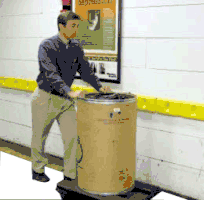
- Material: High-Impact Plastic Construction
- Sizes: 6" W x 42" L x 2" D and 10" W x 42" L x 2" D
- Installation: Wall-Mounted Impact Protection
- Applications: Commercial, Industrial, Healthcare, Educational, and Warehouse Facilities

| Buy More, Save More! | ||
|---|---|---|
| Quantity | Price Each | |
| 1 - 11 pieces | $99.96 ea. | |
| 12+ pieces | $81.00 ea. | |
| Buy More, Save More! | ||
|---|---|---|
| Quantity | Price Each | |
| 1 - 11 pieces | $109.96 ea. | |
| 12+ pieces | $89.08 ea. | |
Product Comparison Chart
Configuration Analysis
Plastic wall guards are available in multiple widths to accommodate varying levels of wall protection. The 6-inch wide model provides localized impact protection for moderate traffic areas, while the 10-inch wide version increases the protective surface area for locations exposed to larger carts, transport equipment, and heavier material handling operations. Both configurations maintain a standard 42-inch length and 2-inch depth, allowing consistent installation across corridors, loading areas, utility rooms, and service hallways.
Material Engineering
These wall guards are manufactured from durable impact-resistant plastic engineered to absorb repeated contact without significant deformation. Plastic construction provides resistance to moisture, corrosion, and many common cleaning chemicals, making these guards suitable for environments requiring routine sanitation. Unlike painted wall surfaces, plastic guards help reduce cosmetic damage caused by abrasion, scraping, and minor collisions. Their smooth exterior also simplifies cleaning while maintaining consistent appearance over extended service intervals.
Installation Considerations
Plastic wall guards are designed for direct wall mounting using appropriate fasteners based on the wall substrate. Installation may be performed on drywall, concrete, masonry, wood framing, or metal stud construction using compatible anchors and hardware. Proper placement typically aligns with the height of carts, wheelchairs, hand trucks, or transport equipment to maximize protection. Multiple guards may be installed in continuous runs to protect long corridors or loading areas where repeated impacts occur.
Industrial and Commercial Applications
Plastic wall guards are utilized across numerous industries where walls are regularly exposed to accidental contact. Healthcare facilities install them in patient corridors and equipment rooms to reduce maintenance caused by medical carts and wheelchairs. Warehouses and distribution centers use wall guards to minimize damage from pallet jacks and material handling equipment. Educational institutions, hospitality facilities, retail stores, office buildings, and manufacturing plants also benefit from wall protection systems that reduce repair frequency and maintain building interiors.
Selection Criteria
Selecting the appropriate wall guard depends on anticipated traffic levels, equipment dimensions, installation location, and required coverage area. Narrower guards may be sufficient for pedestrian corridors with occasional cart traffic, while wider models provide additional protection in loading areas and industrial environments. Buyers should also evaluate mounting surface compatibility, environmental exposure, cleaning requirements, and spacing between multiple guards when designing a complete wall protection system.
| Product | Width | Length | Depth | Material | Installation | Typical Applications |
|---|---|---|---|---|---|---|
| Plastic Wall Guard | 6" | 42" | 2" | High-Impact Plastic | Wall Mounted | Hallways, Offices, Schools, Healthcare Facilities |
| Plastic Wall Guard | 10" | 42" | 2" | High-Impact Plastic | Wall Mounted | Warehouses, Hospitals, Commercial Buildings, Industrial Facilities |
Configuration Analysis
Plastic wall guards are available in multiple widths to accommodate varying levels of wall protection. The 6-inch wide model provides localized impact protection for moderate traffic areas, while the 10-inch wide version increases the protective surface area for locations exposed to larger carts, transport equipment, and heavier material handling operations. Both configurations maintain a standard 42-inch length and 2-inch depth, allowing consistent installation across corridors, loading areas, utility rooms, and service hallways.
Material Engineering
These wall guards are manufactured from durable impact-resistant plastic engineered to absorb repeated contact without significant deformation. Plastic construction provides resistance to moisture, corrosion, and many common cleaning chemicals, making these guards suitable for environments requiring routine sanitation. Unlike painted wall surfaces, plastic guards help reduce cosmetic damage caused by abrasion, scraping, and minor collisions. Their smooth exterior also simplifies cleaning while maintaining consistent appearance over extended service intervals.
Installation Considerations
Plastic wall guards are designed for direct wall mounting using appropriate fasteners based on the wall substrate. Installation may be performed on drywall, concrete, masonry, wood framing, or metal stud construction using compatible anchors and hardware. Proper placement typically aligns with the height of carts, wheelchairs, hand trucks, or transport equipment to maximize protection. Multiple guards may be installed in continuous runs to protect long corridors or loading areas where repeated impacts occur.
Industrial and Commercial Applications
Plastic wall guards are utilized across numerous industries where walls are regularly exposed to accidental contact. Healthcare facilities install them in patient corridors and equipment rooms to reduce maintenance caused by medical carts and wheelchairs. Warehouses and distribution centers use wall guards to minimize damage from pallet jacks and material handling equipment. Educational institutions, hospitality facilities, retail stores, office buildings, and manufacturing plants also benefit from wall protection systems that reduce repair frequency and maintain building interiors.
Selection Criteria
Selecting the appropriate wall guard depends on anticipated traffic levels, equipment dimensions, installation location, and required coverage area. Narrower guards may be sufficient for pedestrian corridors with occasional cart traffic, while wider models provide additional protection in loading areas and industrial environments. Buyers should also evaluate mounting surface compatibility, environmental exposure, cleaning requirements, and spacing between multiple guards when designing a complete wall protection system.

