


Stainless Steel Drum Plug Sockets | Industrial Tooling
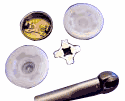
- Material Composition: 304 and 316 Grade Stainless Steel.
- Drive Size: Standard 1/2" Square Drive Compatibility.
- Compliance: Non-sparking and corrosion-resistant for hazardous environments.
- Application: Fits 2" and 3/4" Round and Hex Head Bung Plugs.

| Product Name | Material Construction | Compatibility |
|---|---|---|
| Stainless Steel Drum Plug Socket | 304/316 Stainless Steel | Universal 2" and 3/4" Bungs |
Socket Drive and Head Geometry Industrial drum plug sockets are typically configured with a 1/2" square drive, allowing for integration with standard ratchets, torque wrenches, and pneumatic tools. The working end of the socket features a multi-tab or "cross-bar" geometry. This specific configuration is designed to engage with the recessed patterns found on both round-head and hex-head drum plugs. By distributing torque evenly across the plug's internal ribs, the socket minimizes the risk of "rounding off" the bung, which is a common failure point when using non-specialized tools.
Alloy Selection and Corrosion Resistance The use of 304 or 316 stainless steel in tool manufacturing provides distinct advantages over traditional carbon steel or bronze. Stainless steel is inherently resistant to oxidation and the corrosive effects of moisture, salts, and various industrial acids. Unlike plated tools, which can flake or peel, solid stainless steel sockets maintain their surface integrity even after repeated impact or exposure to harsh cleaning agents. This material choice is critical in "clean room" or "wash-down" environments where carbon steel tools would introduce iron oxide contamination into the production line.
Hazardous Material Compliance and Safety The secure closure of industrial drums is governed by Department of Transportation (DOT) and UN regulations. These standards require that drum plugs be tightened to specific torque ratings to prevent leaks during transit. Stainless steel sockets are compatible with calibrated torque wrenches, enabling operators to meet documented safety protocols. Additionally, in environments classified by OSHA as potentially explosive, stainless steel's non-sparking properties (relative to ferrous metals) provide an added layer of safety during the handling of flammable liquids or combustible dusts.
Sector-Specific Use Cases The application of stainless steel drum tooling spans several critical sectors. In the pharmaceutical industry, the requirement for sterile processing necessitates tools that can be autoclaved or sanitized with aggressive solvents. In food and beverage production, these sockets prevent cross-contamination and meet FDA-aligned sanitation requirements. The chemical and petrochemical industries utilize stainless steel sockets for the handling of specialized reagents and corrosive precursors that would degrade standard alloy steel tools.
Technical Factors for Procurement When selecting a drum plug socket, technical buyers must evaluate the specific bung types utilized in their facility. While universal sockets are designed to fit most 2" and 3/4" plugs, some specialized plastic or vintage metal drums may require unique tooth patterns. Compatibility with existing torque delivery systems is also paramount; users must ensure the socket's drive size matches the wrench's output to avoid the use of adapters, which can decrease torque accuracy. Finally, the choice between 304 and 316 grade stainless steel should be dictated by the severity of the corrosive environment, with 316 offering superior resistance to chlorides and marine conditions.

