


Cast Stretch Film | Machine & Hand Stretch Wrap Rolls
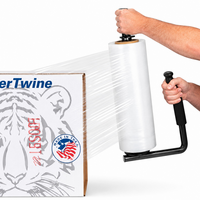
- Material: Linear Low-Density Polyethylene (LLDPE) Cast Stretch Film.
- Gauge Range: 60, 70, 80, 90, and 120 Gauge.
- Widths & Roll Sizes: 12", 15", 18", and 20" machine rolls up to 7,500 feet.
- Configurations: Hand Stretch Wrap and Machine Applied Stretch Wrap.
- Load Capacities: Designed for pallet loads from approximately 1,600 lbs to 4,000 lbs.

Product Comparison Chart
Cast Stretch Film Configurations Cast stretch film is available in two primary configurations: hand-applied rolls and machine-applied rolls. Hand stretch film is intended for manual pallet wrapping and is commonly used in warehouses, retail operations, and shipping departments handling lower packaging volumes. Machine stretch film is designed for automatic and semi-automatic stretch wrapping equipment where consistent film tension, controlled pre-stretch, and higher throughput are required. Machine rolls are supplied in 20-inch widths with extended roll lengths ranging from 6,000 to 7,500 feet. Hand rolls are available in 12-inch, 15-inch, and 18-inch widths to accommodate different pallet sizes and operator preferences.
Material Construction and Film Engineering Cast stretch film is manufactured from linear low-density polyethylene (LLDPE) using a cast extrusion process. During production, molten polyethylene is extruded through a flat die and rapidly cooled over chilled rollers, producing a film with uniform thickness, smooth surfaces, and consistent mechanical properties. The cast manufacturing process produces high optical clarity, allowing barcodes, labels, and shipping information to remain visible after wrapping. The film also exhibits controlled cling characteristics that allow multiple layers to bond together without adhesives while minimizing residue on packaged products. Gauge selection directly affects puncture resistance, holding force, and load containment. Higher gauges provide increased tear resistance for heavier or irregular pallet loads while lower gauges reduce material usage for lighter shipments.
Gauge Thickness and Load Capacity The available film gauges provide different levels of containment force based on pallet weight and transportation requirements.
60 Gauge – loads up to approximately 1,600 lbs
70 Gauge – loads up to approximately 2,000 lbs
80 Gauge – loads up to approximately 2,500 lbs
90 Gauge – loads up to approximately 3,000 lbs
120 Gauge – loads up to approximately 4,000 lbs
Proper gauge selection depends on pallet dimensions, product shape, stacking pattern, transportation distance, and storage conditions. Heavy or unstable loads generally require thicker film to maintain containment during handling and shipment.
Industrial Applications Cast stretch film is used throughout manufacturing, warehousing, food distribution, consumer goods packaging, agriculture, pharmaceutical distribution, and third-party logistics operations. The film secures cartons, bags, drums, pails, and bulk containers onto pallets while helping reduce shifting during forklift handling and transportation. Clear cast film allows inventory identification without removing the wrap, making it suitable for facilities utilizing barcode scanning, automated inventory systems, and warehouse management software. Machine stretch film is commonly selected for high-volume production environments where automated wrapping improves packaging consistency and material utilization. Hand stretch film is appropriate for lower-volume shipping stations, receiving departments, and mobile warehouse operations.
Selection Criteria When selecting cast stretch film, buyers should evaluate pallet weight, load dimensions, wrapping method, film gauge, roll width, and equipment compatibility. Machine stretch film must match the specifications of automatic or semi-automatic stretch wrapping equipment, including core size, roll length, and pre-stretch capability. For manual applications, roll width and gauge influence operator effort, film consumption, and load containment. Facilities shipping heavier or irregularly shaped products may require thicker gauges to improve puncture resistance, while lighter pallet loads may use lower gauges to reduce packaging material usage. Storage conditions should also be considered, including exposure to dust, moisture, UV light, and extended warehouse storage periods that may affect film performance.
| Product | Application | Gauge | Width | Roll Length | Load Capacity | Pack Size |
|---|---|---|---|---|---|---|
| Machine Stretch Film | Machine Applied | 60 Gauge | 20" | 7,500' | Up to 1,600 lbs | 40 Rolls |
| Machine Stretch Film | Machine Applied | 70 Gauge | 20" | 6,500' | Up to 2,000 lbs | 40 Rolls |
| Machine Stretch Film | Machine Applied | 80 Gauge | 20" | 6,000' | Up to 2,500 lbs | 40 Rolls |
| Hand Stretch Film | Hand Applied | 60 Gauge | 12", 15", 18" | Standard Hand Roll | Up to 1,600 lbs | 4 Rolls |
| Hand Stretch Film | Hand Applied | 70 Gauge | 12", 15", 18" | Standard Hand Roll | Up to 2,000 lbs | 4 Rolls |
| Hand Stretch Film | Hand Applied | 80 Gauge | 12", 15", 18" | Standard Hand Roll | Up to 2,500 lbs | 4 Rolls |
| Hand Stretch Film | Hand Applied | 90 Gauge | 12", 15", 18" | Standard Hand Roll | Up to 3,000 lbs | 4 Rolls |
| Hand Stretch Film | Hand Applied | 120 Gauge | 15", 18" | Standard Hand Roll | Up to 4,000 lbs | 4 Rolls |
Cast Stretch Film Configurations Cast stretch film is available in two primary configurations: hand-applied rolls and machine-applied rolls. Hand stretch film is intended for manual pallet wrapping and is commonly used in warehouses, retail operations, and shipping departments handling lower packaging volumes. Machine stretch film is designed for automatic and semi-automatic stretch wrapping equipment where consistent film tension, controlled pre-stretch, and higher throughput are required. Machine rolls are supplied in 20-inch widths with extended roll lengths ranging from 6,000 to 7,500 feet. Hand rolls are available in 12-inch, 15-inch, and 18-inch widths to accommodate different pallet sizes and operator preferences.
Material Construction and Film Engineering Cast stretch film is manufactured from linear low-density polyethylene (LLDPE) using a cast extrusion process. During production, molten polyethylene is extruded through a flat die and rapidly cooled over chilled rollers, producing a film with uniform thickness, smooth surfaces, and consistent mechanical properties. The cast manufacturing process produces high optical clarity, allowing barcodes, labels, and shipping information to remain visible after wrapping. The film also exhibits controlled cling characteristics that allow multiple layers to bond together without adhesives while minimizing residue on packaged products. Gauge selection directly affects puncture resistance, holding force, and load containment. Higher gauges provide increased tear resistance for heavier or irregular pallet loads while lower gauges reduce material usage for lighter shipments.
Gauge Thickness and Load Capacity The available film gauges provide different levels of containment force based on pallet weight and transportation requirements.
Proper gauge selection depends on pallet dimensions, product shape, stacking pattern, transportation distance, and storage conditions. Heavy or unstable loads generally require thicker film to maintain containment during handling and shipment.
Industrial Applications Cast stretch film is used throughout manufacturing, warehousing, food distribution, consumer goods packaging, agriculture, pharmaceutical distribution, and third-party logistics operations. The film secures cartons, bags, drums, pails, and bulk containers onto pallets while helping reduce shifting during forklift handling and transportation. Clear cast film allows inventory identification without removing the wrap, making it suitable for facilities utilizing barcode scanning, automated inventory systems, and warehouse management software. Machine stretch film is commonly selected for high-volume production environments where automated wrapping improves packaging consistency and material utilization. Hand stretch film is appropriate for lower-volume shipping stations, receiving departments, and mobile warehouse operations.
Selection Criteria When selecting cast stretch film, buyers should evaluate pallet weight, load dimensions, wrapping method, film gauge, roll width, and equipment compatibility. Machine stretch film must match the specifications of automatic or semi-automatic stretch wrapping equipment, including core size, roll length, and pre-stretch capability. For manual applications, roll width and gauge influence operator effort, film consumption, and load containment. Facilities shipping heavier or irregularly shaped products may require thicker gauges to improve puncture resistance, while lighter pallet loads may use lower gauges to reduce packaging material usage. Storage conditions should also be considered, including exposure to dust, moisture, UV light, and extended warehouse storage periods that may affect film performance.

