


Industrial Mailing Tubes & Collection Cans | Shipping Supplies
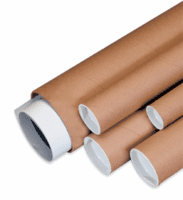
- Material Composition: Kraft Paperboard, High-Density Polyethylene, Tin-Plated Steel.
- Size/Capacity Range: 1" to 6" Diameters; Adjustable lengths up to 48".
- Compliance/Ratings: USPS, UPS, and FedEx Shipping Standards; Secondary Containment compliant.
- Closure Types: Plastic End Caps, Metal Screw Caps, Crimped Ends, Telescopic Friction Fit.

| Product Category | Primary Material | Closure Mechanism | Primary Application |
|---|---|---|---|
| Screw Cap Mailers | High-Density Plastic/Metal | Threaded Screw Cap | Laboratory Samples & Small Parts |
| Telescopic Mailers | Heavy-Duty Kraft | Friction Fit (Adjustable) | Variable Length Documents |
| Mailing Tubes | Spiral-Wound Paperboard | Plastic End Caps | Posters & Blueprints |
| Collection Cans | Tin-Plated Steel | Friction Lid / Lever Lock | Hazardous Waste & Specimen Storage |
| Crimped End Tubes | Recycled Paperboard | Integrated Folded Ends | High-Volume Fulfillment |
Technical Design Variations The structural configuration of industrial mailing containers is dictated by the rigidity requirements of the contents. Standard mailing tubes utilize a fixed-length cylinder with separate plastic end caps that friction-fit into the orifice. Telescopic mailers consist of two overlapping tubes, allowing the user to adjust the internal volume to match the specific length of the item, which eliminates internal movement during shipping. For high-security or fluid-based transport, screw cap mailers provide a threaded interface that offers a mechanical seal, reducing the risk of accidental opening. Crimped-end tubes are a specialized variant where the ends of the tube are mechanically folded inward, removing the need for external caps and simplifying high-volume packaging workflows.
Substrate Properties and Durability The performance of these containers is centered on the burst strength and wall thickness of the materials used. Kraft mailing tubes are manufactured using spiral-wound layers of paperboard bonded with industrial adhesives; the "wall thickness" (measured in inches) determines the tube’s resistance to side-impact crushing. Collection cans and screw cap mailers often utilize tin-plated steel or high-density polyethylene (HDPE). Steel provides an impermeable barrier against light and moisture, while HDPE offers chemical inertness for laboratory specimens. For document protection, the pH-neutral properties of certain kraft liners prevent the degradation of archival papers during long-term storage or transit.
Shipping and Compliance Protocols Industrial containers must adhere to specific postal and safety regulations. Most paper-based mailing tubes are designed to meet USPS, UPS, and FedEx dimensional requirements for "non-machinable" or "parcel" classifications. Collection cans used for the transport of hazardous materials or biological samples are often engineered to meet secondary containment standards, ensuring that if an internal primary container fails, the outer can prevents leakage. These units may also be required to meet ASTM standards for puncture resistance and compression strength, particularly when used in stacked warehouse environments or international air freight.
Sector-Specific Utilization The application of these containers spans multiple technical fields. In the architectural and engineering sectors, large-diameter kraft tubes are the standard for transporting blueprints and schematics without creasing. In medical and forensic fields, screw cap mailers and collection cans serve as secure vessels for diagnostic samples, evidence, and chemicals. The manufacturing sector utilizes crimped-end tubes for the protective shipping of precision-machined rods, shafts, and tools. Additionally, the retail fulfillment industry employs these containers for the distribution of artwork, textiles, and consumer products that require cylindrical protection.
Technical Assessment Factors Selecting the appropriate container requires an analysis of the internal object’s dimensions and vulnerability. Buyers must calculate the "clear usable length," which is the interior space available after the closures are inserted. For heavy items, a higher wall thickness (e.g., .125" vs .060") is necessary to prevent bending. Chemical compatibility must be assessed for collection cans, particularly when storing volatile organic compounds or corrosive agents. Finally, the environmental conditions of the transit route—such as humidity levels—should dictate whether a moisture-resistant coating or a metal-based container is required over standard paperboard.

