


Justrite Solvent Safety Drain Cans | 3 & 5 Gallon
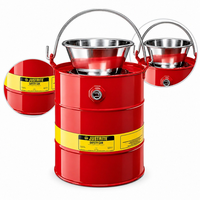
- Material Composition: Steel drain cans with removable plated-steel funnels and integrated flame arresters.
- Size/Capacity Range: 3-gallon (11 L) and 5-gallon (19 L) solvent drain cans.
- Compliance/Ratings: FM-approved configurations are available; verify the specific model and application requirements before use. :contentReference[oaicite:0]{index=0}
- Closure Types: Wide-mouth removable funnel with built-in flame arrester and 3/4-inch threaded drain plug.
- Accessories: Optional drain can cover fits the funnel opening to limit dirt and debris entry. :contentReference[oaicite:1]{index=1}

$184.96
$217.60
(You Save 15%)$192.96
$226.96
(You Save 15%)$59.96
$70.96
(You Save 16%)Product Comparison Chart
Drain Can Configuration and Capacity Justrite solvent drain cans use a collection-funnel configuration rather than the spring-loaded fill-and-pour opening found on many conventional safety cans. The removable funnel measures approximately 8.875 inches in diameter and provides a broad receiving area for liquids draining from parts washers, rinse tanks, and similar equipment. The 3-gallon Model 10903 measures approximately 12.25 inches high by 11.625 inches in outside diameter. The 5-gallon Model 10905 increases the height to approximately 16.75 inches while retaining an 11.625-inch outside diameter. The larger capacity reduces the frequency of waste-liquid transfer where process volumes are higher.
Funnel, Flame Arrester, and Drain Plug Design The plated-steel funnel is removable to allow access for cleaning and maintenance. A built-in flame arrester is incorporated into the funnel assembly to help prevent external ignition sources from reaching flammable vapors or liquid contents. A 3/4-inch threaded plug provides a dedicated outlet for transferring accumulated waste liquid into a permanent collection or disposal receptacle. The optional cover fits over the funnel when collection is not occurring, reducing the entry of dust, dirt, and other workplace contaminants.
Steel Construction and Surface Components The drain-can bodies are manufactured from steel, providing a rigid enclosure suited to stationary collection beneath industrial cleaning and processing equipment. The funnels use plated steel, which provides a metallic receiving surface for solvent drainage while permitting removal for cleaning. Unlike polyethylene chemical-disposal cans, these models rely on steel construction and do not use an HDPE body. Material compatibility should therefore be evaluated against the specific solvent or waste stream being collected, particularly where corrosive acids, alkaline solutions, chlorinated compounds, or mixed chemical wastes are involved.
FM Approval and Workplace Requirements Justrite identifies Model 10903 as FM approved, and current manufacturer information also lists FM approval for applicable 5-gallon drain-can configurations. FM approval indicates that the product has been evaluated against applicable performance criteria established by FM Approvals. This designation should not be interpreted as automatic authorization for every hazardous-material storage, waste-management, or transportation application. Buyers should distinguish between workplace collection equipment and UN-rated shipping containers. DOT hazardous-material transportation requirements, OSHA workplace rules, fire-code requirements, and facility waste procedures must be evaluated separately according to the liquid, quantity, location, and intended handling process.
Solvent Collection and Process Waste Applications These drain cans are primarily configured for collection of used solvents and liquid waste generated by parts-cleaning and rinsing operations. Typical applications include maintenance departments collecting solvent below parts washers, manufacturing facilities handling cleaning-fluid drainage, automotive and equipment service operations, and industrial finishing processes that generate compatible solvent waste. Food-processing or agricultural facilities may also use controlled liquid-waste collection equipment for compatible maintenance chemicals, but suitability depends on the actual chemical composition rather than the industry alone. These cans should not be treated as food-contact containers or transportation packages unless the specific product documentation supports that application.
Capacity, Chemical Compatibility, and Installation Selection should begin with expected waste-liquid volume. A 3-gallon container reduces overall height and may fit beneath equipment with limited clearance, while a 5-gallon container provides additional holding capacity for higher-volume drainage. Buyers should compare solvent chemistry with steel compatibility, review flash point and hazardous-waste classifications, and confirm whether the facility requires specific approval or listing standards. Available floor space, equipment clearance, transfer frequency, and access to the 3/4-inch drain plug should also be considered. Where airborne dirt or process debris could enter the wide funnel between uses, the optional cover provides a physical barrier over the opening.
Storage and Waste-Handling Considerations Collected solvent waste should be managed according to the facility’s chemical-management procedures and applicable environmental, fire, and occupational-safety requirements. The drain can’s flame arrester addresses ignition exposure at the funnel, but proper grounding, bonding, ventilation, segregation, labeling, and waste transfer procedures may still be required depending on the liquid involved. The drain can should be positioned on a stable surface where the funnel aligns with the discharge point from the equipment. Before selecting a model, buyers should confirm capacity, chemical compatibility, approval requirements, transfer procedures, and whether the container will remain a workplace collection vessel or be used only as an intermediate stage before waste is moved to an approved storage or shipping container.
| Product | Capacity | Material | Configuration | Key Features |
|---|---|---|---|---|
| Justrite 3 Gallon Solvent Safety Drain Can 10903 | 3 gal / 11 L | Steel can; plated-steel funnel | Wide-mouth drain funnel | Built-in flame arrester, removable funnel, 3/4-inch threaded plug, FM approved |
| Justrite Solvent Safety Drain Can 5 Gallon | 5 gal / 19 L | Steel can; plated-steel funnel | Wide-mouth drain funnel | Built-in flame arrester, removable funnel, 3/4-inch threaded plug |
| Justrite Solvent Safety Drain Can Optional Cover 811176 | Fits 3- and 5-gallon drain cans | Cover accessory | Funnel-top cover | Helps keep dirt and debris out of the drain-can funnel |
Drain Can Configuration and Capacity Justrite solvent drain cans use a collection-funnel configuration rather than the spring-loaded fill-and-pour opening found on many conventional safety cans. The removable funnel measures approximately 8.875 inches in diameter and provides a broad receiving area for liquids draining from parts washers, rinse tanks, and similar equipment. The 3-gallon Model 10903 measures approximately 12.25 inches high by 11.625 inches in outside diameter. The 5-gallon Model 10905 increases the height to approximately 16.75 inches while retaining an 11.625-inch outside diameter. The larger capacity reduces the frequency of waste-liquid transfer where process volumes are higher.
Funnel, Flame Arrester, and Drain Plug Design The plated-steel funnel is removable to allow access for cleaning and maintenance. A built-in flame arrester is incorporated into the funnel assembly to help prevent external ignition sources from reaching flammable vapors or liquid contents. A 3/4-inch threaded plug provides a dedicated outlet for transferring accumulated waste liquid into a permanent collection or disposal receptacle. The optional cover fits over the funnel when collection is not occurring, reducing the entry of dust, dirt, and other workplace contaminants.
Steel Construction and Surface Components The drain-can bodies are manufactured from steel, providing a rigid enclosure suited to stationary collection beneath industrial cleaning and processing equipment. The funnels use plated steel, which provides a metallic receiving surface for solvent drainage while permitting removal for cleaning. Unlike polyethylene chemical-disposal cans, these models rely on steel construction and do not use an HDPE body. Material compatibility should therefore be evaluated against the specific solvent or waste stream being collected, particularly where corrosive acids, alkaline solutions, chlorinated compounds, or mixed chemical wastes are involved.
FM Approval and Workplace Requirements Justrite identifies Model 10903 as FM approved, and current manufacturer information also lists FM approval for applicable 5-gallon drain-can configurations. FM approval indicates that the product has been evaluated against applicable performance criteria established by FM Approvals. This designation should not be interpreted as automatic authorization for every hazardous-material storage, waste-management, or transportation application. Buyers should distinguish between workplace collection equipment and UN-rated shipping containers. DOT hazardous-material transportation requirements, OSHA workplace rules, fire-code requirements, and facility waste procedures must be evaluated separately according to the liquid, quantity, location, and intended handling process.
Solvent Collection and Process Waste Applications These drain cans are primarily configured for collection of used solvents and liquid waste generated by parts-cleaning and rinsing operations. Typical applications include maintenance departments collecting solvent below parts washers, manufacturing facilities handling cleaning-fluid drainage, automotive and equipment service operations, and industrial finishing processes that generate compatible solvent waste. Food-processing or agricultural facilities may also use controlled liquid-waste collection equipment for compatible maintenance chemicals, but suitability depends on the actual chemical composition rather than the industry alone. These cans should not be treated as food-contact containers or transportation packages unless the specific product documentation supports that application.
Capacity, Chemical Compatibility, and Installation Selection should begin with expected waste-liquid volume. A 3-gallon container reduces overall height and may fit beneath equipment with limited clearance, while a 5-gallon container provides additional holding capacity for higher-volume drainage. Buyers should compare solvent chemistry with steel compatibility, review flash point and hazardous-waste classifications, and confirm whether the facility requires specific approval or listing standards. Available floor space, equipment clearance, transfer frequency, and access to the 3/4-inch drain plug should also be considered. Where airborne dirt or process debris could enter the wide funnel between uses, the optional cover provides a physical barrier over the opening.
Storage and Waste-Handling Considerations Collected solvent waste should be managed according to the facility’s chemical-management procedures and applicable environmental, fire, and occupational-safety requirements. The drain can’s flame arrester addresses ignition exposure at the funnel, but proper grounding, bonding, ventilation, segregation, labeling, and waste transfer procedures may still be required depending on the liquid involved. The drain can should be positioned on a stable surface where the funnel aligns with the discharge point from the equipment. Before selecting a model, buyers should confirm capacity, chemical compatibility, approval requirements, transfer procedures, and whether the container will remain a workplace collection vessel or be used only as an intermediate stage before waste is moved to an approved storage or shipping container.

