


Propane Tanks & LP Cylinders | Industrial Gas Storage
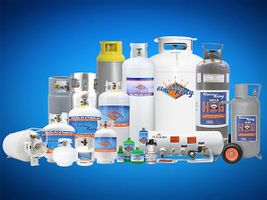
- Material Composition: High-Strength Welded Steel and ASME-Grade Carbon Steel.
- Size/Capacity Range: 20 lb, 30 lb, 40 lb, 100 lb, and 420 lb (120-Gallon) capacities.
- Compliance/Ratings: DOT (Department of Transportation) and ASME (American Society of Mechanical Engineers) certified.
- Valve Types: Overfill Prevention Devices (OPD) and Prest-O-Lite (POL) service valves.

$79.98
$88.95
(You Save 10%)$144.98
$160.95
(You Save 10%)$189.98
$210.95
(You Save 10%)$269.98
$299.95
(You Save 10%)$1,299.96
$1,664.95
(You Save 22%)| Product Name | Capacity | Valve Type | Certification |
|---|---|---|---|
| New Premium 20 lbs Propane Tank | 20 lbs | OPD | DOT |
| New Premium 30 lb Propane Tank | 30 lbs | OPD | DOT |
| New Premium 40 lb Propane Tank | 40 lbs | OPD | DOT |
| New Premium 100 lb Propane Tank | 100 lbs | POL | DOT |
| New Premium 420# ASME Vertical Steel Propane Tank | 420 lbs (120-Gal) | POL/Multi-valve | ASME |
Portable vs. Stationary Tank Design The configuration of a propane vessel is determined by its intended mobility and volume. Portable cylinders (20 lb to 100 lb) are designed for vertical operation and transport, featuring a protective collar (shroud) to shield the valve assembly and a foot ring for stability. These units are utilized in applications requiring frequent relocation. Stationary tanks, such as the 420 lb (120-gallon) ASME models, are engineered for permanent or semi-permanent installation. These larger vessels often utilize a multi-valve system to accommodate high-volume vapor withdrawal and bulk filling procedures without the need to disconnect the tank from the service line.
Steel Specifications and Surface Protection Industrial propane tanks are manufactured from heavy-gauge, cold-rolled steel sections that are joined using automated welding processes to ensure leak-proof seams. The steel must meet specific tensile strength requirements to withstand internal vapor pressures that fluctuate based on ambient temperature. To prevent oxidation and chemical degradation, the exterior surfaces undergo a multi-stage finishing process, typically involving a shot-blast treatment followed by the application of an electrostatically baked-on powder coating. This finish provides a barrier against UV rays and moisture, which is critical for maintaining the wall thickness and safety rating of the vessel over its service life.
DOT and ASME Compliance Propane storage is governed by two primary sets of regulations. Portable cylinders are regulated by the Department of Transportation (DOT) under Title 49 of the Code of Federal Regulations. These cylinders require periodic requalification (recertification) every 5, 10, or 12 years depending on the last test method used. Larger, high-capacity vessels are manufactured according to American Society of Mechanical Engineers (ASME) Section VIII standards. Unlike DOT cylinders, ASME tanks are intended for stationary use and do not require periodic requalification, provided they remain in situ and maintain structural integrity. All units must include a data plate or stamping indicating the manufacture date, water capacity, and tare weight.
Sector-Specific Utility Propane tanks serve as primary energy sources across multiple sectors. In construction and manufacturing, 20 lb to 40 lb tanks power forklifts, floor buffers, and portable heaters. The 100 lb cylinders are frequently deployed in agricultural settings for grain drying or in remote commercial sites for temporary heating. Large 420 lb ASME tanks are utilized for high-demand applications, including commercial kitchens, industrial furnaces, and as a primary heating fuel source for facilities located outside the reach of natural gas infrastructure.
Technical Factors for Procurement When selecting an LP gas container, the primary consideration is the vaporized flow rate required by the connected equipment. Smaller tanks have lower vaporization rates; if the BTU demand of the appliance exceeds the tank's ability to convert liquid propane to gas, the system will lose pressure. Additionally, valve compatibility is critical. The Overfill Prevention Device (OPD) is a safety requirement for cylinders up to 40 lbs, preventing the tank from being filled beyond 80% capacity to allow for thermal expansion. For high-volume industrial use, POL valves are preferred for their ability to deliver higher flow rates without triggering safety shut-offs inherent in smaller consumer-grade connections.

