


Pail Openers & Bucket Lid Tools | Industrial Manual Tools
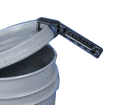
- Material Composition: Cast Aluminum, Forged Steel, Spark-Resistant Alloys, Heavy-Duty Plastic.
- Tool Capability: Cutting, Lifting, Prying, and Resealing functionalities.
- Compatibility: Standard 5-Gallon Pails, UN-Rated Plastic Buckets, and Steel Containers.
- Safety Ratings: Spark-resistant options for volatile environments; Ergonomic high-leverage designs.

| Buy More, Save More! | ||
|---|---|---|
| Quantity | Price Each | |
| 1 - 1 pieces | $6.95 ea. | |
| 2 - 5 pieces | $6.61 ea. | |
| 6 - 11 pieces | $6.25 ea. | |
| 12 - 23 pieces | $5.91 ea. | |
| 24 - 47 pieces | $5.56 ea. | |
| 48 - 95 pieces | $5.21 ea. | |
| 96+ pieces | $4.95 ea. | |
$49.98
$58.80
(You Save 15%)
$29.95$39.95(You Save 25%)
| Buy More, Save More! | ||
|---|---|---|
| Quantity | Price Each | You Save |
| 1 - 11 pieces | $29.95 ea. | $10.00 (25%) |
| 12+ pieces | $26.95 ea. | $13.00 (33%) |
$21.59$26.95(You Save 20%)
| Buy More, Save More! | ||
|---|---|---|
| Quantity | Price Each | You Save |
| 1 - 9 pieces | $21.59 ea. | $5.36 (20%) |
| 10+ pieces | $19.95 ea. | $7.00 (26%) |
$15.98
$19.99
(You Save 20%)| Product Name | Material | Primary Function | Compatibility |
|---|---|---|---|
| Standard Pail Lid Remover | Heavy-Duty Plastic/Steel | Lifting/Prying | Standard Plastic Pails |
| 5 Gallon Pail Opener | Steel | High-Leverage Lifting | Plastic and Metal Lids |
| 3-in-1 Pail Opener | Cast Aluminum | Cut, Lift, Reseal | UN-Rated Plastic Buckets |
| High Leverage Pail Opener | Reinforced Steel | Heavy-Duty Prying | Tight-Sealed Industrial Pails |
| Aluminum Pail Opener | Aluminum | Spark-Resistant Lifting | Plastic and Steel Covers |
| Shorty Aluminum Opener | Aluminum | Compact Prying | Standard Pails |
| Bucket Buster | Industrial Alloy | Rapid Lid Removal | High-Volume Operations |
Technical Tool Configurations Pail openers are categorized by their mechanical operation: prying tools, cutting tools, and multi-function systems. Standard prying tools utilize a fulcrum point to lift the edge of a lid away from the container rim. High-leverage models feature extended handles, typically ranging from 15 to 21 inches, to increase torque for lids with tight gaskets or those that have been vacuum-sealed. Cutting openers are designed with integrated blades specifically for UN-rated plastic pails where the lid must be partially sectioned to break the factory seal. Multi-function configurations incorporate a hammer head or flat surface on the reverse side to facilitate the resealing of the lid without requiring a separate mallet.
Material Properties and Safety The construction material of a pail opener dictates its application environment. Cast aluminum is the industry standard for general-purpose tools due to its high strength-to-weight ratio and natural resistance to corrosion. For environments involving flammable vapors or volatile chemicals, spark-resistant alloys are mandatory to prevent ignition during the prying process. Forged steel openers provide the highest tensile strength and are utilized for heavy-gauge steel pails where plastic or aluminum tools might deform under the required pressure. Some tools feature ergonomic polymer grips to reduce vibration and hand fatigue during repetitive high-volume opening tasks.
Compliance and Container Integrity Industrial pail openers are designed to interface with containers that meet Department of Transportation (DOT) and Occupational Safety and Health Administration (OSHA) standards. When handling UN-rated buckets for hazardous materials, the use of a proper opening tool is critical to ensure the container is not punctured or structurally compromised. Standardized tools ensure that the lid’s locking mechanism remains intact, which is a requirement for maintaining the original rating if the container is to be transported after initial opening. Utilizing the correct tool ensures compliance with safety protocols regarding the prevention of chemical splashes and spills during the seal-breaking process.
Sector-Specific Utility In food processing, stainless steel or high-grade aluminum openers are required to meet hygiene standards and prevent contamination. The chemical and coating industries rely on these tools for the rapid processing of pigments, resins, and solvents where precision is necessary to avoid product loss. In agricultural and construction sectors, high-leverage steel openers are utilized to handle high-viscosity materials like adhesives and lubricants. The ability to open containers quickly and without damage is also essential in laboratory settings where frequent sampling of palletized raw materials occurs.
Technical Factors for Procurement Selecting the appropriate pail opener requires an evaluation of the container material, the frequency of use, and the storage environment. If the operation involves UN-rated plastic containers, a 3-in-1 tool capable of cutting the seal is necessary. For operations utilizing steel containers, a tool with a hardened steel prying head is required to prevent tool wear. Buyers must also consider the physical dimensions of the tool; longer handles provide greater leverage for operators, while "shorty" models are preferred for tight storage areas or mobile kits. Chemical compatibility of the tool material itself must be verified to prevent degradation if the tool comes into direct contact with aggressive substances.

