


Stainless Steel Drums | Industrial & Food-Grade Storage
After this time if you have questions, Please Call Our Baytec Customer Service Representative Toll Free At 888-460-3786.
- Material Composition: stainless steel
- Size/Capacity Range: 5-gallon to 55-gallon stainless steel drums.
- Compliance/Ratings: UN-rated liquid and solid options, DOT-compliant, FDA food-grade options.
- Closure Types: Open-head bolt ring closures and tight-head bung openings.
- Configurations: Seamless bottom and conventional bottom designs available by model.
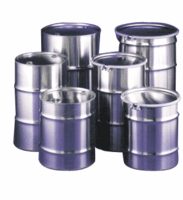
Stainless steel drums are industrial containers used for food-grade storage, chemical handling, pharmaceutical processing, and high-purity material transport. This section includes 5, 8, 10, 16, 20, 30, and 55-gallon drums manufactured stainless steel. Available configurations include open-head drums with removable covers and bolt ring closures, as well as tight-head drums with sealed tops and bung openings for liquid dispensing. UN-rated and DOT-compliant models support regulated shipping requirements, while FDA food-grade options are suited for applications where product purity and corrosion resistance are required.
Seamless Vs. Conventional Bottom Design
Open-Head Closure Instructions
Tight-Head Closing Instructions

$759.98
$869.97
(You Save 13%)$759.98
$897.97
(You Save 15%)$499.98
$619.97
(You Save 19%)
$459.98
$549.99
(You Save 16%)$379.98
$499.99
(You Save 24%)$499.98
$600.00
(You Save 17%)$279.98
$409.97
(You Save 32%)$299.98
$389.97
(You Save 23%)$259.98
$359.99
(You Save 28%)$279.98
$369.99
(You Save 24%)$249.98
$329.99
(You Save 24%)$299.98
$349.99
(You Save 14%)$229.98
$299.97
(You Save 23%)Open Head Solid UN Markings Sheet
Closed Head Nitric Stainless UN Markings Sheet
Open Head Liquid UN Markings Sheet
Closed Head Liquid UN Markings Sheet
Product Comparison Chart
Configuration Analysis Stainless steel drums are supplied in open-head and tight-head configurations. Open-head drums use a removable cover secured by a bolt ring closure, allowing full access to the drum interior. This format is used for solids, powders, pastes, semi-solids, and viscous products that cannot be transferred easily through a bung opening. Tight-head drums have a sealed top with threaded bung openings, typically used for low-viscosity liquids that require controlled filling, dispensing, and sealed transport. Tight-head models reduce exposure during handling and are commonly paired with pumps, faucets, vents, and dispensing adapters.
Material Engineering The stainless steel grade determines the container’s corrosion resistance, cleaning requirements, and chemical compatibility. Type 304 stainless steel is widely used for food-grade, fragrance, pharmaceutical, and general industrial storage. Type 304L contains lower carbon content, which supports welded construction and reduces the risk of carbide precipitation in certain environments. Type 316 stainless steel includes molybdenum, improving resistance to chlorides, salts, and more aggressive chemical exposure. Type 409 stainless steel is used in applications where stainless construction is required but exposure conditions are less demanding. Gauge, seam design, bottom construction, and finish also affect drum strength, sanitation, and reusability.
Regulatory Standards UN-rated stainless steel drums are marked according to packaging performance standards for regulated materials. Tight-head liquid drums and open-head solid drums may carry different UN markings based on their tested design type, closure system, packing group, and contents. DOT compliance applies when drums are used for hazardous material transport in regulated shipping channels. Buyers should match the drum’s UN marking sheet to the product being stored or shipped, including liquid or solid classification, material density, packing group, and closure instructions. Proper torque, gasket placement, bung installation, and ring closure procedures are required to maintain the tested package rating.
Industrial Applications Stainless steel drums are used where contamination control, washdown compatibility, and corrosion resistance are required. Food processors use stainless drums for ingredients, flavorings, oils, syrups, and sanitary bulk handling. Chemical manufacturers use them for solvents, specialty chemicals, acids, and high-purity intermediates, subject to compatibility review. Pharmaceutical and cosmetic operations use stainless containers for fragrances, extracts, powders, and sensitive ingredients. Agricultural and laboratory users may use smaller 5 to 20-gallon drums for samples, concentrates, additives, and controlled batch storage. Larger 30 and 55-gallon models are used for production-scale storage and shipping.
Selection Criteria Drum selection should be based on material compatibility, product form, closure access, shipping requirements, and storage environment. Open-head drums should be considered when the product requires scooping, manual loading, liner use, or full cleanout access. Tight-head drums should be considered for liquids that need sealed containment and controlled dispensing. Capacity should match handling limits, batch volume, and available storage space. Stainless grade should be reviewed against acids, salts, chlorides, solvents, and cleaning chemicals. For regulated shipping, buyers should confirm the correct UN rating, closure instructions, gasket type, and allowable product density before filling or transport.
Closed Head Nitric Stainless UN Markings Sheet
Open Head Liquid UN Markings Sheet
Closed Head Liquid UN Markings Sheet
Product Comparison Chart
| Product | Capacity | Closure Type | Configuration | Common Use |
|---|---|---|---|---|
| 55 Gallon Tight Head Stainless Steel Drums | 55 Gallon | Bung Openings | Tight Head | Bulk liquid storage and transport |
| 55 Gallon Open Head Stainless Steel Drums | 55 Gallon | Bolt Ring Closure | Open Head | Solids, powders, and viscous materials |
| 30 Gallon Tight Head Stainless Steel Drums | 30 Gallon | Bung Openings | Tight Head | Mid-size liquid containment |
| 30 Gallon Open Head Stainless Steel Drums | 30 Gallon | Bolt Ring Closure | Open Head | Batch handling and solids storage |
| 20 Gallon Tight Head Stainless Steel Drums | 20 Gallon | Bung Openings | Tight Head | Liquid storage and dispensing |
| 20 Gallon Open Head Stainless Steel Drums | 20 Gallon | Bolt Ring Closure | Open Head | Solids and semi-solids |
| 16 Gallon Tight Head Stainless Steel Drums | 16 Gallon | Bung Openings | Tight Head | Small-batch liquid storage |
| 16 Gallon Open Head Stainless Steel Drums | 16 Gallon | Bolt Ring Closure | Open Head | Small-batch solids and materials |
| 10 Gallon Tight Head Stainless Steel Drums | 10 Gallon | Bung Openings | Tight Head | Controlled liquid containment |
| 10 Gallon Open Head Stainless Steel Drums | 10 Gallon | Bolt Ring Closure | Open Head | Small-volume solids storage |
| 8 Gallon Tight Head Stainless Steel Drums | 8 Gallon | Bung Openings | Tight Head | Compact liquid storage |
| 8 Gallon Open Head Stainless Steel Drum With Bolt Ring Closure | 8 Gallon | Bolt Ring Closure | Open Head | Compact open-access storage |
| 5 Gallon Tight Head Stainless Steel Drums | 5 Gallon | Bung Openings | Tight Head | Small liquid storage and dispensing |
| 5 Gallon Open Head Stainless Steel Drums | 5 Gallon | Bolt Ring Closure | Open Head | Small solids and sample storage |
Configuration Analysis Stainless steel drums are supplied in open-head and tight-head configurations. Open-head drums use a removable cover secured by a bolt ring closure, allowing full access to the drum interior. This format is used for solids, powders, pastes, semi-solids, and viscous products that cannot be transferred easily through a bung opening. Tight-head drums have a sealed top with threaded bung openings, typically used for low-viscosity liquids that require controlled filling, dispensing, and sealed transport. Tight-head models reduce exposure during handling and are commonly paired with pumps, faucets, vents, and dispensing adapters.
Material Engineering The stainless steel grade determines the container’s corrosion resistance, cleaning requirements, and chemical compatibility. Type 304 stainless steel is widely used for food-grade, fragrance, pharmaceutical, and general industrial storage. Type 304L contains lower carbon content, which supports welded construction and reduces the risk of carbide precipitation in certain environments. Type 316 stainless steel includes molybdenum, improving resistance to chlorides, salts, and more aggressive chemical exposure. Type 409 stainless steel is used in applications where stainless construction is required but exposure conditions are less demanding. Gauge, seam design, bottom construction, and finish also affect drum strength, sanitation, and reusability.
Regulatory Standards UN-rated stainless steel drums are marked according to packaging performance standards for regulated materials. Tight-head liquid drums and open-head solid drums may carry different UN markings based on their tested design type, closure system, packing group, and contents. DOT compliance applies when drums are used for hazardous material transport in regulated shipping channels. Buyers should match the drum’s UN marking sheet to the product being stored or shipped, including liquid or solid classification, material density, packing group, and closure instructions. Proper torque, gasket placement, bung installation, and ring closure procedures are required to maintain the tested package rating.
Industrial Applications Stainless steel drums are used where contamination control, washdown compatibility, and corrosion resistance are required. Food processors use stainless drums for ingredients, flavorings, oils, syrups, and sanitary bulk handling. Chemical manufacturers use them for solvents, specialty chemicals, acids, and high-purity intermediates, subject to compatibility review. Pharmaceutical and cosmetic operations use stainless containers for fragrances, extracts, powders, and sensitive ingredients. Agricultural and laboratory users may use smaller 5 to 20-gallon drums for samples, concentrates, additives, and controlled batch storage. Larger 30 and 55-gallon models are used for production-scale storage and shipping.
Selection Criteria Drum selection should be based on material compatibility, product form, closure access, shipping requirements, and storage environment. Open-head drums should be considered when the product requires scooping, manual loading, liner use, or full cleanout access. Tight-head drums should be considered for liquids that need sealed containment and controlled dispensing. Capacity should match handling limits, batch volume, and available storage space. Stainless grade should be reviewed against acids, salts, chlorides, solvents, and cleaning chemicals. For regulated shipping, buyers should confirm the correct UN rating, closure instructions, gasket type, and allowable product density before filling or transport.

