


Mechanical Flowmeters | Rotary & Piston Pump Meters
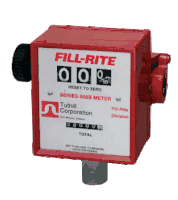
Available in multiple sizes including 3/4", 1", and 1-1/2" NPT connections, these industrial flowmeters are compatible with a wide range of pump systems. Corrosion-resistant models are also available for handling more aggressive fluids. Their mechanical design ensures consistent performance without the need for power, making them a dependable choice for continuous operation.
Mechanical flowmeters improve accuracy, reduce waste, and support efficient fluid management in demanding environments.

PRODUCT TYPES: Mechanical flowmeters in this category are designed specifically for use with rotary and piston pumps. Available in multiple connection sizes such as 3/4", 1", and 1-1/2" NPT, these meters support a wide range of industrial fluid transfer systems. Standard models are used for oils and fuels, while corrosion-resistant mechanical flowmeters are available for more aggressive liquids. These units provide reliable measurement without electronic components.
MATERIALS & DURABILITY: Built for industrial use, mechanical flowmeters feature durable metal housings and precision internal components. These meters are designed to withstand continuous use in demanding environments, maintaining accuracy over time. Corrosion-resistant models provide added protection when handling chemicals or harsh fluids, extending service life and reducing maintenance needs.
INDUSTRY USE CASES: Mechanical flowmeters are widely used in manufacturing, automotive service, fuel handling, and industrial fluid transfer operations. They are commonly installed inline with rotary and piston pumps to measure flow rates and total volume during dispensing. These flowmeters are ideal for applications where simple, reliable measurement is required without dependence on electrical systems.
COMPLIANCE & SAFETY: Accurate measurement helps prevent overfilling, reduce spills, and maintain safe fluid handling practices. Mechanical flowmeters provide controlled monitoring of liquid transfer, improving system safety and efficiency. Their non-electronic design makes them suitable for environments where electrical equipment may be limited or restricted.
BUYING CONSIDERATIONS: When selecting a mechanical flowmeter, consider connection size, fluid type, and compatibility with your pump system. Choose corrosion-resistant models when handling aggressive chemicals. Ensure the meter matches your required flow rate and operating conditions to maintain accuracy and performance.
COST & EFFICIENCY: Mechanical flowmeters offer a cost-effective solution for reliable fluid measurement. With no electronic components, they require minimal maintenance and provide long-term durability. These meters help reduce waste, improve accuracy, and support efficient operation in industrial and maintenance applications.
Mechanical flowmeters provide durable, non-electric measurement for rotary and piston pump systems, ideal for oils, fuels, and industrial fluid transfer.
MATERIALS & DURABILITY: Built for industrial use, mechanical flowmeters feature durable metal housings and precision internal components. These meters are designed to withstand continuous use in demanding environments, maintaining accuracy over time. Corrosion-resistant models provide added protection when handling chemicals or harsh fluids, extending service life and reducing maintenance needs.
INDUSTRY USE CASES: Mechanical flowmeters are widely used in manufacturing, automotive service, fuel handling, and industrial fluid transfer operations. They are commonly installed inline with rotary and piston pumps to measure flow rates and total volume during dispensing. These flowmeters are ideal for applications where simple, reliable measurement is required without dependence on electrical systems.
COMPLIANCE & SAFETY: Accurate measurement helps prevent overfilling, reduce spills, and maintain safe fluid handling practices. Mechanical flowmeters provide controlled monitoring of liquid transfer, improving system safety and efficiency. Their non-electronic design makes them suitable for environments where electrical equipment may be limited or restricted.
BUYING CONSIDERATIONS: When selecting a mechanical flowmeter, consider connection size, fluid type, and compatibility with your pump system. Choose corrosion-resistant models when handling aggressive chemicals. Ensure the meter matches your required flow rate and operating conditions to maintain accuracy and performance.
COST & EFFICIENCY: Mechanical flowmeters offer a cost-effective solution for reliable fluid measurement. With no electronic components, they require minimal maintenance and provide long-term durability. These meters help reduce waste, improve accuracy, and support efficient operation in industrial and maintenance applications.
Mechanical flowmeters provide durable, non-electric measurement for rotary and piston pump systems, ideal for oils, fuels, and industrial fluid transfer.

