


Hazmat UN 4G F-Style Gallon Shipping Boxes
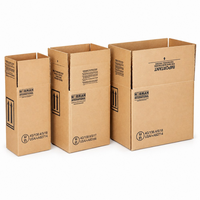
- material composition: corrugated fiberboard outer shipping boxes designed for f-style metal or plastic cans.
- size/capacity range: configurations for one, two, or four 1-gallon f-style cans.
- compliance/ratings: un 4g-style packaging configurations intended for regulated hazardous-material shipping when used according to the applicable tested packaging specification.
- package configuration: single-can, two-can, and four-can gallon shipping box formats.
- pack quantity: supplied in 20-box packs.

$279.96
$330.00
(You Save 15%)$439.96
$509.00
(You Save 14%)Product Comparison Chart
Configuration Analysis UN 4G F-style shipping boxes are differentiated primarily by the number of 1-gallon inner containers accommodated within the outer fiberboard carton. A single-can configuration minimizes the number of inner containers within one package and can be used where shipment quantities are limited or where individual container separation is required. Two-can configurations consolidate two gallon containers into one outer package, while four-can configurations increase the quantity shipped within a single completed package. The internal dimensions, partitions, cushioning components, and container orientation must correspond to the packaging design under which the system was tested. Substituting different cans, changing container dimensions, removing required inserts, or altering the closure system can affect compliance with the original packaging specification.
Material Engineering The 4G designation refers to a fiberboard box used as the outer packaging in a combination packaging system. Corrugated fiberboard construction provides structural rigidity while maintaining a comparatively low package weight. Performance depends on factors including board grade, flute structure, wall construction, seam design, moisture exposure, compression strength, and closure method. F-style cans are rectangular containers commonly used for liquid products and are typically selected to maximize space efficiency within shipping cartons. Hazardous-material packages may also require absorbent material, cushioning, partitions, liners, or other internal components. These components help control movement, separate inner packages, and manage leakage where required by the tested design and applicable shipping regulations.
Regulatory Standards and UN 4G Packaging UN performance-oriented packaging markings identify packaging designs that have been tested for specified hazardous-material transportation conditions. In the designation 4G, "4" identifies a box and "G" identifies fiberboard construction. A UN marking does not mean that every hazardous material can be shipped in the carton without additional evaluation. Compliance depends on the complete packaging assembly and the hazardous material's classification, packing group, liquid density or solid gross mass, mode of transportation, and specific packaging authorization. Shippers are responsible for selecting authorized packaging, following the packaging manufacturer's assembly instructions, applying required closures, and meeting applicable U.S. Department of Transportation hazardous-material requirements. Workplace handling, labeling, employee training, and hazard communication may also involve OSHA requirements separate from transportation packaging rules.
Industrial Applications F-style gallon shipping boxes are used where liquid products are packed in rectangular 1-gallon cans for distribution or transport. Chemical manufacturers may use compatible configurations for coatings, solvents, adhesives, cleaning compounds, additives, and process chemicals when permitted by the applicable packaging instruction. Agricultural suppliers may use F-style containers for certain regulated concentrates and treatment products. Automotive and industrial maintenance operations may package lubricants, specialty fluids, coatings, or chemical formulations in similar container formats. Additional applications include laboratory supply, manufacturing, paint and coating distribution, and industrial chemical fulfillment. The specific product placed in the inner can must be evaluated independently for chemical compatibility and transportation classification before shipment.
Selection Criteria Selection should begin with the number and dimensions of the 1-gallon F-style cans being shipped. Buyers should verify that the outer carton is designed for the exact inner-container configuration and determine whether required inserts, cushioning, absorbents, or partitions are included or must be sourced separately. The hazardous material's UN identification number, hazard class, packing group, specific gravity, quantity limits, and authorized packaging instruction should be reviewed before choosing a shipping system. Container material and closure compatibility with the liquid are also important because the outer 4G box does not replace the containment function of the inner can. Storage humidity, stacking conditions, transportation mode, gross package weight, sealing tape requirements, and manufacturer assembly instructions should also be considered.
| Product | Inner Container Configuration | Container Size | Outer Packaging Type | Pack Quantity |
|---|---|---|---|---|
| Hazmat 4G Packaging Shipping Boxes for F-style Cans 1-1 gal. | 1 F-style can | 1 Gallon | UN 4G Fiberboard Shipping Box | 20 Pack |
| Hazmat 4G Shipping Boxes for F-Style Cans | 2 F-style cans | 1 Gallon Each | UN 4G Fiberboard Shipping Box | 20 Pack |
| Hazmat 4G Shipping Boxes for 4 One-Gallon F-Style Cans | 4 F-style cans | 1 Gallon Each | UN 4G Fiberboard Shipping Box | 20 Pack |
Configuration Analysis UN 4G F-style shipping boxes are differentiated primarily by the number of 1-gallon inner containers accommodated within the outer fiberboard carton. A single-can configuration minimizes the number of inner containers within one package and can be used where shipment quantities are limited or where individual container separation is required. Two-can configurations consolidate two gallon containers into one outer package, while four-can configurations increase the quantity shipped within a single completed package. The internal dimensions, partitions, cushioning components, and container orientation must correspond to the packaging design under which the system was tested. Substituting different cans, changing container dimensions, removing required inserts, or altering the closure system can affect compliance with the original packaging specification.
Material Engineering The 4G designation refers to a fiberboard box used as the outer packaging in a combination packaging system. Corrugated fiberboard construction provides structural rigidity while maintaining a comparatively low package weight. Performance depends on factors including board grade, flute structure, wall construction, seam design, moisture exposure, compression strength, and closure method. F-style cans are rectangular containers commonly used for liquid products and are typically selected to maximize space efficiency within shipping cartons. Hazardous-material packages may also require absorbent material, cushioning, partitions, liners, or other internal components. These components help control movement, separate inner packages, and manage leakage where required by the tested design and applicable shipping regulations.
Regulatory Standards and UN 4G Packaging UN performance-oriented packaging markings identify packaging designs that have been tested for specified hazardous-material transportation conditions. In the designation 4G, "4" identifies a box and "G" identifies fiberboard construction. A UN marking does not mean that every hazardous material can be shipped in the carton without additional evaluation. Compliance depends on the complete packaging assembly and the hazardous material's classification, packing group, liquid density or solid gross mass, mode of transportation, and specific packaging authorization. Shippers are responsible for selecting authorized packaging, following the packaging manufacturer's assembly instructions, applying required closures, and meeting applicable U.S. Department of Transportation hazardous-material requirements. Workplace handling, labeling, employee training, and hazard communication may also involve OSHA requirements separate from transportation packaging rules.
Industrial Applications F-style gallon shipping boxes are used where liquid products are packed in rectangular 1-gallon cans for distribution or transport. Chemical manufacturers may use compatible configurations for coatings, solvents, adhesives, cleaning compounds, additives, and process chemicals when permitted by the applicable packaging instruction. Agricultural suppliers may use F-style containers for certain regulated concentrates and treatment products. Automotive and industrial maintenance operations may package lubricants, specialty fluids, coatings, or chemical formulations in similar container formats. Additional applications include laboratory supply, manufacturing, paint and coating distribution, and industrial chemical fulfillment. The specific product placed in the inner can must be evaluated independently for chemical compatibility and transportation classification before shipment.
Selection Criteria Selection should begin with the number and dimensions of the 1-gallon F-style cans being shipped. Buyers should verify that the outer carton is designed for the exact inner-container configuration and determine whether required inserts, cushioning, absorbents, or partitions are included or must be sourced separately. The hazardous material's UN identification number, hazard class, packing group, specific gravity, quantity limits, and authorized packaging instruction should be reviewed before choosing a shipping system. Container material and closure compatibility with the liquid are also important because the outer 4G box does not replace the containment function of the inner can. Storage humidity, stacking conditions, transportation mode, gross package weight, sealing tape requirements, and manufacturer assembly instructions should also be considered.

