


Industrial Polypropylene Funnels & Utility Fillers
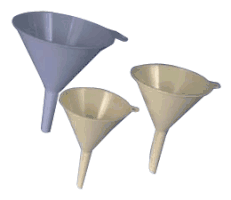
- Material Composition: High-Density Polypropylene (HDPE) and chemically resistant polymers.
- Size/Capacity Range: 8 oz, 12 oz, 20 oz, and specialized 12-inch high-capacity models.
- Compliance/Ratings: Chemical compatibility for fuel, petroleum, and non-corrosive liquids.
- Closure Types: Open-top intake with tapered, splash-reducing spouts.

$9.98$14.98(You Save 33%)
| Buy More, Save More! | ||
|---|---|---|
| Quantity | Price Each | You Save |
| 1 - 4 pieces | $9.98 ea. | $5.00 (33%) |
| 5+ pieces | $8.98 ea. | $6.00 (40%) |
| Buy More, Save More! | ||
|---|---|---|
| Quantity | Price Each | |
| 1 - 4 pieces | $9.95 ea. | |
| 5+ pieces | $8.95 ea. | |
$1.49
$3.95
(You Save 62%)$9.98$14.98(You Save 33%)
| Buy More, Save More! | ||
|---|---|---|
| Quantity | Price Each | You Save |
| 1 - 4 pieces | $9.98 ea. | $5.00 (33%) |
| 5+ pieces | $8.98 ea. | $6.00 (40%) |
| Product Name | Capacity / Length | Material | Primary Application |
|---|---|---|---|
| Large Poly Funnel for Fuel/Oil | 12-Inch Length | High-Density Polypropylene | Type I Gas Can Filling |
| Low Cost Utility Funnel | 20 oz | Polypropylene | General Fluid Transfer |
| Low Cost Utility Funnel (Discontinued) | 8 oz | Polypropylene | Small Scale Decanting |
| Low Cost Utility Funnel (Discontinued) | 12 oz | Polypropylene | Medium Volume Transfer |
Geometric Variations in Industrial Funnels Industrial funnels are categorized by spout length, bowl diameter, and venting capabilities. The large 12-inch poly funnel is a specialized configuration designed with an extended reach to bypass safety baffles in Type I safety cans. This length ensures the spout remains seated within the receiving vessel, neutralizing the risk of backflow or tipping. Standard utility funnels, such as the 20 oz variant, feature a wider bowl diameter to accommodate higher volumes of fluid displacement, coupled with a tapered spout that fits standard neck openings. These designs prioritize flow velocity and the reduction of turbulence, which is critical when handling viscous fluids like motor oils or hydraulic liquids.
Polymer Durability and Chemical Resistance The utility funnels in this category are manufactured from injection-molded polypropylene. This thermoplastic polymer is selected for its high fatigue resistance and chemical neutrality. Polypropylene maintains structural integrity when exposed to a wide range of pH levels and hydrocarbon-based fluids, preventing the material degradation often seen in lower-grade plastics. The non-polar surface of the material facilitates easy cleaning and minimizes cross-contamination between different fluid batches. In heavy-duty applications, the wall thickness of the funnel is optimized to resist deformation under the weight of a full fluid load while remaining lightweight for manual operation.
Safety Compliance and Handling Requirements While utility funnels are non-pressurized vessels, their use is governed by workplace safety standards regarding the transfer of flammable and hazardous liquids. Using a funnel specifically engineered for fuel cans, such as the 12-inch poly model, assists in compliance with spill prevention protocols. By ensuring a secure fit between the source and the destination, these tools help operators meet environmental regulations concerning hazardous waste runoff. The transition from discontinued 8 oz and 12 oz models toward larger, more robust units reflects an industry shift toward higher-capacity tools that reduce the frequency of pouring actions, thereby lowering the statistical probability of accidental exposure.
Sector-Specific Utility and Use Cases Industrial funnels serve critical roles across multiple sectors. In automotive and fleet maintenance, they are used for the precision filling of lubricants, coolants, and fuels into engines and storage tanks. Within agricultural settings, they facilitate the mixing and transfer of liquid fertilizers and pesticides. In laboratory or light manufacturing environments, the 8 oz and 12 oz sizes (where available) are utilized for measuring and decanting reagents or chemical additives into narrow-neck flasks. The 20 oz and 12-inch models are predominantly used in industrial warehouses where bulk liquids are broken down into smaller, portable containers for daily operational use.
Technical Factors for Procurement When selecting a utility funnel, technical specifications must align with the fluid's viscosity and the receiving container's dimensions. The "pour rate" is determined by the spout's internal diameter; narrower spouts offer higher precision but may cause "glugging" if not properly vented. Chemical compatibility charts should be consulted to ensure that the specific grade of polypropylene is suited for the temperature and concentration of the liquid. Furthermore, the physical reach required for the task dictates the choice between a standard 20 oz funnel and an elongated 12-inch model, as insufficient spout length can lead to unstable positioning and subsequent fluid loss.

