


IPL Commercial Series Food Containers & Lids
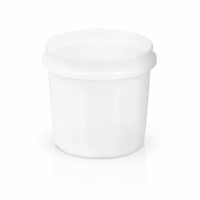
- Material Composition: Polypropylene (PP) food-container bodies and compatible snap-on lids.
- Size and Capacity Range: 1/4-gallon, 1/2-gallon, 1-gallon, and 10-pound containers.
- Packaging: Commercial case quantities of 100 containers or lids.
- Closure Types: Separate snap-on lids matched to specific container models.
- Configuration: No-handle containers designed for food storage, processing, and ingredient handling.

$54.95
$64.95
(You Save 15%)$14.95
$19.95
(You Save 25%)$147.95
$167.95
(You Save 12%)$47.95
$57.95
(You Save 17%)$191.95
$216.95
(You Save 12%)$54.95
$64.95
(You Save 15%)$199.95
$209.95
(You Save 5%)$48.95
$56.60
(You Save 14%)Product Comparison Chart
Container Configuration Analysis IPL Commercial Series food containers use a rigid, open-top configuration with separate snap-on closures. This design allows the container body and lid to be purchased independently, supporting operations that consume or replace components at different rates. The listed range includes volumetric containers measured in gallons and a 10-pound container intended for products commonly managed by weight. The 1/4-gallon and 1/2-gallon sizes support portioning, sampling, sauces, prepared ingredients, and smaller production batches. One-gallon containers accommodate higher-volume ingredients and finished food products. The 10-pound format may be used for bulk powders, bakery ingredients, fillings, spreads, or other compatible products. No-handle construction reduces exterior projections and supports close placement on shelves, carts, and pallets.
Material Engineering The listed containers are manufactured from polypropylene, commonly identified as PP. Polypropylene is a thermoplastic material characterized by low density, moisture resistance, and resistance to many diluted acids, alkalis, detergents, and food ingredients. Actual compatibility depends on product concentration, temperature, contact time, and formulation. Rigid PP construction helps containers retain their shape during filling, stacking, and routine handling. Snap-on lids rely on dimensional alignment between the lid channel and the container rim. Because the lids are associated with specific product numbers, buyers should not assume that closures are interchangeable across capacities. Container wall thickness, resin formulation, and closure geometry are manufacturer-controlled specifications that affect stacking strength, impact response, and sealing performance.
Food-Handling and Regulatory Considerations Food containers should be evaluated according to their intended contact conditions and the applicable sanitation procedures used by the facility. Buyers should verify manufacturer documentation concerning food-contact suitability, temperature limitations, reuse guidance, and cleaning requirements. These containers are not identified in the supplied product information as UN-rated hazardous-material packages. They should therefore not be selected for regulated dangerous-goods transportation unless separate certification confirms compliance. OSHA requirements may apply to workplace labeling and handling when containers are used for chemicals rather than food. DOT packaging rules may also apply when contents meet regulated hazardous-material classifications. Original product labels and traceability information should be retained where required by facility procedures.
Industrial and Commercial Applications Commercial kitchens can use these containers for prepared ingredients, sauces, dry goods, garnishes, and batch organization. Bakeries may use the smaller capacities for toppings, flavorings, fillings, and measured ingredients, while 10-pound containers can support bulk mixes or semi-solid products. Food processors may use the containers for staging ingredients between production steps, holding samples, or packaging compatible finished products. Institutional dining operations, commissaries, cafeterias, and catering facilities may use standardized capacities to improve portion control and inventory organization. Agricultural and specialty-food operations can use compatible containers for honey, syrups, seasonings, powders, or processed ingredients after confirming material and closure compatibility.
Selection Criteria Capacity should be selected according to product density, fill volume, headspace requirements, and handling frequency. Buyers should confirm whether a gallon-based or weight-based format matches their production controls. Each lid must be paired with the specified container model to maintain proper closure fit. Storage temperature, product acidity, fat content, and cleaning chemicals should be reviewed for polypropylene compatibility. Stack height and filled weight should be assessed to prevent container deformation. Facilities should also determine whether tamper evidence, airtight performance, freezer use, hot filling, or automated labeling is required, as these characteristics are not established by the supplied product names.
| Product | Capacity | Material | Configuration | Case Quantity | Compatible Closure |
|---|---|---|---|---|---|
| Commercial Series Food Container | 1/4 Gallon | Polypropylene | No Handle, Open Top | 100 | Snap-On Lid for Model 860346-001-02 |
| Snap-On Lid for Model 860346-001-02 | Fits 1/4-Gallon Container | Polypropylene | Snap-On Closure | 100 | 1/4-Gallon Commercial Series Container |
| Commercial Series Food Container | 1/2 Gallon | Polypropylene | Open Top | 100 | Snap-On Lid for Model 861992-001-08 |
| Snap-On Lid for Model 861992-001-08 | Fits 1/2-Gallon Container | Polypropylene | Snap-On Closure | 100 | 1/2-Gallon Commercial Series Container |
| Commercial Series Food Container | 10 Pounds | Polypropylene | Open Top | 100 | Snap-On Lid for Model 862329-001-08 |
| Snap-On Lid for Model 862329-001-08 | Fits 10-Pound Container | Polypropylene | Snap-On Closure | 100 | 10-Pound Commercial Series Container |
| Commercial Series Food Container | 1 Gallon | Polypropylene | No Handle, Open Top | 100 | Snap-On Lid for Model 860383-001-08 |
| Snap-On Lid for Model 860383-001-08 | Fits 1-Gallon Container | Polypropylene | Snap-On Closure | 100 | 1-Gallon Commercial Series Container |
Container Configuration Analysis IPL Commercial Series food containers use a rigid, open-top configuration with separate snap-on closures. This design allows the container body and lid to be purchased independently, supporting operations that consume or replace components at different rates. The listed range includes volumetric containers measured in gallons and a 10-pound container intended for products commonly managed by weight. The 1/4-gallon and 1/2-gallon sizes support portioning, sampling, sauces, prepared ingredients, and smaller production batches. One-gallon containers accommodate higher-volume ingredients and finished food products. The 10-pound format may be used for bulk powders, bakery ingredients, fillings, spreads, or other compatible products. No-handle construction reduces exterior projections and supports close placement on shelves, carts, and pallets.
Material Engineering The listed containers are manufactured from polypropylene, commonly identified as PP. Polypropylene is a thermoplastic material characterized by low density, moisture resistance, and resistance to many diluted acids, alkalis, detergents, and food ingredients. Actual compatibility depends on product concentration, temperature, contact time, and formulation. Rigid PP construction helps containers retain their shape during filling, stacking, and routine handling. Snap-on lids rely on dimensional alignment between the lid channel and the container rim. Because the lids are associated with specific product numbers, buyers should not assume that closures are interchangeable across capacities. Container wall thickness, resin formulation, and closure geometry are manufacturer-controlled specifications that affect stacking strength, impact response, and sealing performance.
Food-Handling and Regulatory Considerations Food containers should be evaluated according to their intended contact conditions and the applicable sanitation procedures used by the facility. Buyers should verify manufacturer documentation concerning food-contact suitability, temperature limitations, reuse guidance, and cleaning requirements. These containers are not identified in the supplied product information as UN-rated hazardous-material packages. They should therefore not be selected for regulated dangerous-goods transportation unless separate certification confirms compliance. OSHA requirements may apply to workplace labeling and handling when containers are used for chemicals rather than food. DOT packaging rules may also apply when contents meet regulated hazardous-material classifications. Original product labels and traceability information should be retained where required by facility procedures.
Industrial and Commercial Applications Commercial kitchens can use these containers for prepared ingredients, sauces, dry goods, garnishes, and batch organization. Bakeries may use the smaller capacities for toppings, flavorings, fillings, and measured ingredients, while 10-pound containers can support bulk mixes or semi-solid products. Food processors may use the containers for staging ingredients between production steps, holding samples, or packaging compatible finished products. Institutional dining operations, commissaries, cafeterias, and catering facilities may use standardized capacities to improve portion control and inventory organization. Agricultural and specialty-food operations can use compatible containers for honey, syrups, seasonings, powders, or processed ingredients after confirming material and closure compatibility.
Selection Criteria Capacity should be selected according to product density, fill volume, headspace requirements, and handling frequency. Buyers should confirm whether a gallon-based or weight-based format matches their production controls. Each lid must be paired with the specified container model to maintain proper closure fit. Storage temperature, product acidity, fat content, and cleaning chemicals should be reviewed for polypropylene compatibility. Stack height and filled weight should be assessed to prevent container deformation. Facilities should also determine whether tamper evidence, airtight performance, freezer use, hot filling, or automated labeling is required, as these characteristics are not established by the supplied product names.

