


Gravity Feed Drum Mixer | 55-Gallon Drum Mixing
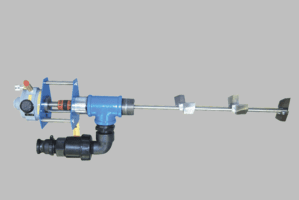
- Configuration: Bung-entering gravity feed mixer for horizontal 55-gallon drums.
- Mixing Capacity: Handles high-viscosity liquids up to 50,000 cP.
- Motor: 1-1/2 HP inherently explosion-proof air motor operating at 80–100 PSI.
- Dispensing: Ball valve outlet with quick disconnect and 1.5-inch I.D. hose barb.
- Applications: Epoxies, urethanes, silicones, and heavy solid-filled materials.

$3,996.96
$4,702.00
(You Save 15%)
Product Comparison Chart
Gravity Feed Mixing and Dispensing Configuration A gravity feed drum mixer combines material agitation and controlled discharge in a single drum-mounted system. The unit is intended for a horizontal 55-gallon drum rather than the conventional upright mixing arrangement. Its bung-entering design allows the mixing components to pass through the drum opening while the drum remains positioned for gravity-assisted discharge. Material can continue to be mixed while it is being dispensed, reducing separation of pigments, fillers, solids, or other components during transfer. A ball valve regulates discharge flow, while the quick-disconnect fitting and 1.5-inch I.D. hose barb provide a connection point for downstream material handling equipment. Bay Tec Containers
High-Viscosity Material Handling The mixer is configured for formulations with viscosities up to approximately 50,000 cP. Materials in this range require more torque and mixing energy than water-like liquids because resistance against the mixing element increases as viscosity rises. Examples identified for this equipment include epoxies, urethanes, silicones, and heavy solid-filled mixtures. At the upper end of the viscosity range, the manufacturer specifies approximately 100 PSI of air pressure to provide sufficient power. The pneumatic drive develops 1-1/2 HP and consumes approximately 28 CFM at 80 PSI. Facility air supply capacity, regulator sizing, hose diameter, and pressure loss should therefore be evaluated when integrating the mixer into a production system. Bay Tec Containers
Explosion-Proof Air Motor Considerations The mixer uses an inherently explosion-proof pneumatic motor rather than a standard electric drive. Pneumatic motors do not use electrical windings or switching components at the mixer motor that can serve as conventional electrical ignition sources. However, the motor description alone does not establish that an entire installation complies with a specific OSHA hazardous-location classification, National Electrical Code classification, or facility safety requirement. Operators should evaluate the material being mixed, vapor characteristics, ventilation, grounding and bonding procedures, surrounding electrical equipment, compressed-air system, and facility classification before use. UN/DOT packaging ratings apply to containers used for regulated hazardous-material transportation and should not be inferred from the mixer specification itself.
Chemical and Process Applications Gravity feed mixing is used where formulation consistency must be maintained while material is progressively removed from a drum. Chemical-processing applications can include two-component system ingredients, resins, coatings, adhesives, sealants, and filled compounds. Epoxy and urethane formulations may contain pigments or solids that settle during storage, making continued agitation relevant before and during dispensing. Silicone and other viscous materials may also require sustained mixing to maintain uniform composition. In manufacturing environments, the ball-valve discharge arrangement can support controlled transfer to hoses, smaller process vessels, application systems, or intermediate containers. Production and Material Transfer Applications The horizontal drum configuration can be incorporated into batch-processing, coating, fabrication, composite, maintenance, and dispensing operations where 55-gallon drums serve as both storage and feed containers. Because material can be discharged during agitation, the system reduces the need to stop mixing before transferring product. This operating method may be useful for formulations containing suspended particles or constituents with different densities that can separate during extended dispensing cycles.
Operating Requirements and Compatibility Selection should begin with drum orientation, drum capacity, material viscosity, compressed-air availability, and discharge requirements. This mixer is specifically configured for horizontal 55-gallon drums and requires an air supply within the specified 80–100 PSI operating range. Materials approaching 50,000 cP require approximately 100 PSI according to the product specifications. Buyers should also verify that wetted mixer components, valves, fittings, hoses, seals, and drum materials are chemically compatible with the product being processed. Hose routing and downstream equipment should accommodate the 1.5-inch I.D. discharge connection and the expected material flow characteristics. Process and Safety Evaluation Additional considerations include required mixing duration, solids concentration, temperature, material density, air consumption, ventilation, grounding and bonding, and cleaning procedures. The mixer weighs approximately 18 pounds, which should be considered when developing installation, removal, and maintenance procedures. Facilities handling flammable or combustible materials should perform a site-specific hazardous-location and ignition-risk assessment rather than relying solely on the pneumatic motor designation. The complete drum, mixer, dispensing hose, receiving container, and surrounding process environment should be evaluated as one material-handling system. Bay Tec Containers
| Product | Drum Size | Motor | Air Requirement | Maximum Recommended Viscosity | Outlet | Weight |
|---|---|---|---|---|---|---|
| Gravity Feed Drum Mixer | 55 Gallon | 1-1/2 HP Air Motor | 80–100 PSI; 28 CFM at 80 PSI | 50,000 cP | Ball Valve, Quick Disconnect, 1.5-Inch I.D. Hose Barb | 18 lb. |
Gravity Feed Mixing and Dispensing Configuration A gravity feed drum mixer combines material agitation and controlled discharge in a single drum-mounted system. The unit is intended for a horizontal 55-gallon drum rather than the conventional upright mixing arrangement. Its bung-entering design allows the mixing components to pass through the drum opening while the drum remains positioned for gravity-assisted discharge. Material can continue to be mixed while it is being dispensed, reducing separation of pigments, fillers, solids, or other components during transfer. A ball valve regulates discharge flow, while the quick-disconnect fitting and 1.5-inch I.D. hose barb provide a connection point for downstream material handling equipment. Bay Tec Containers
High-Viscosity Material Handling The mixer is configured for formulations with viscosities up to approximately 50,000 cP. Materials in this range require more torque and mixing energy than water-like liquids because resistance against the mixing element increases as viscosity rises. Examples identified for this equipment include epoxies, urethanes, silicones, and heavy solid-filled mixtures. At the upper end of the viscosity range, the manufacturer specifies approximately 100 PSI of air pressure to provide sufficient power. The pneumatic drive develops 1-1/2 HP and consumes approximately 28 CFM at 80 PSI. Facility air supply capacity, regulator sizing, hose diameter, and pressure loss should therefore be evaluated when integrating the mixer into a production system. Bay Tec Containers
Explosion-Proof Air Motor Considerations The mixer uses an inherently explosion-proof pneumatic motor rather than a standard electric drive. Pneumatic motors do not use electrical windings or switching components at the mixer motor that can serve as conventional electrical ignition sources. However, the motor description alone does not establish that an entire installation complies with a specific OSHA hazardous-location classification, National Electrical Code classification, or facility safety requirement. Operators should evaluate the material being mixed, vapor characteristics, ventilation, grounding and bonding procedures, surrounding electrical equipment, compressed-air system, and facility classification before use. UN/DOT packaging ratings apply to containers used for regulated hazardous-material transportation and should not be inferred from the mixer specification itself.
Chemical and Process Applications Gravity feed mixing is used where formulation consistency must be maintained while material is progressively removed from a drum. Chemical-processing applications can include two-component system ingredients, resins, coatings, adhesives, sealants, and filled compounds. Epoxy and urethane formulations may contain pigments or solids that settle during storage, making continued agitation relevant before and during dispensing. Silicone and other viscous materials may also require sustained mixing to maintain uniform composition. In manufacturing environments, the ball-valve discharge arrangement can support controlled transfer to hoses, smaller process vessels, application systems, or intermediate containers. Production and Material Transfer Applications The horizontal drum configuration can be incorporated into batch-processing, coating, fabrication, composite, maintenance, and dispensing operations where 55-gallon drums serve as both storage and feed containers. Because material can be discharged during agitation, the system reduces the need to stop mixing before transferring product. This operating method may be useful for formulations containing suspended particles or constituents with different densities that can separate during extended dispensing cycles.
Operating Requirements and Compatibility Selection should begin with drum orientation, drum capacity, material viscosity, compressed-air availability, and discharge requirements. This mixer is specifically configured for horizontal 55-gallon drums and requires an air supply within the specified 80–100 PSI operating range. Materials approaching 50,000 cP require approximately 100 PSI according to the product specifications. Buyers should also verify that wetted mixer components, valves, fittings, hoses, seals, and drum materials are chemically compatible with the product being processed. Hose routing and downstream equipment should accommodate the 1.5-inch I.D. discharge connection and the expected material flow characteristics. Process and Safety Evaluation Additional considerations include required mixing duration, solids concentration, temperature, material density, air consumption, ventilation, grounding and bonding, and cleaning procedures. The mixer weighs approximately 18 pounds, which should be considered when developing installation, removal, and maintenance procedures. Facilities handling flammable or combustible materials should perform a site-specific hazardous-location and ignition-risk assessment rather than relying solely on the pneumatic motor designation. The complete drum, mixer, dispensing hose, receiving container, and surrounding process environment should be evaluated as one material-handling system. Bay Tec Containers

