


Industrial Hand Mixing Paddles & Mixing Sticks
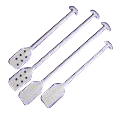
- Materials: Stainless Steel, Polypropylene, Polyethylene, PVC, Nylon, and Hardwood.
- Length Range: 12-inch to 36-inch paddles, scrapers, and mixing sticks.
- Compatibility: Chemical-resistant, corrosion-resistant, and food-contact options.
- Designs: One-piece paddles, scraper paddles, flat mixing sticks, and stainless steel configurations.
- Container Use: Pails, buckets, small drums, tanks, and batch-processing containers.

Product Comparison Chart
Configuration Analysis Hand mixing paddles are differentiated by blade geometry, handle length, construction method, and intended material viscosity. Stainless steel mixing paddles typically use a rigid shaft and formed blade for blending liquids, ingredients, and chemical solutions. One-piece polypropylene and polyethylene paddles are molded without mechanical joints, reducing crevices and connection points where residue can accumulate. PVC paddles are used where compatibility with specific corrosive solutions is required. Nylon scraper paddles combine mixing and wall-scraping functions, helping move settled or adhered material back into the batch. Hardwood paint sticks use a flat profile suited to paints, primers, coatings, epoxies, and other materials packaged in cans or pails.
Material Engineering Stainless steel provides mechanical strength, temperature tolerance, and resistance to oxidation. Material grade and surface finish should be verified when paddles are used with food ingredients, pharmaceuticals, solvents, acids, or chloride-containing solutions. Polypropylene has low density and resistance to many acids, bases, and aqueous chemicals. Polyethylene provides impact resistance and compatibility with many general-purpose industrial liquids. PVC offers resistance to selected acids, alkalis, salts, and chemical solutions but has application-specific temperature limitations. Nylon provides abrasion resistance and sufficient flexibility for scraping container surfaces. Hardwood mixing sticks are disposable or limited-use tools and may absorb liquids, making them unsuitable for processes requiring nonporous or sanitary contact surfaces.
Regulatory and Process Considerations Hand mixing paddles generally do not carry UN packaging ratings because they are tools rather than transport containers. However, paddle selection can affect compliance with workplace handling, sanitation, and contamination-control procedures. Food-processing operations should verify that the paddle material and surface condition meet applicable food-contact requirements. Chemical-handling facilities should review Safety Data Sheets and internal compatibility charts before use. OSHA procedures may require gloves, eye protection, protective clothing, ventilation, and grounding controls depending on the mixed material. Paddles used with hazardous substances should be inspected for cracks, corrosion, swelling, softening, or retained residue before reuse.
Industrial Applications Paint and coating operations use manual paddles for pigment redistribution, color adjustment, and small-batch preparation. Chemical facilities use plastic or stainless steel paddles for diluting concentrates, preparing treatment solutions, and blending additives. Food-processing environments may use stainless steel paddles for ingredients, syrups, sauces, and dry mixes when the material grade is approved for contact. Agricultural applications include fertilizers, nutrients, cleaning solutions, and equipment-maintenance fluids. Maintenance departments use hand paddles for adhesives, sealants, repair compounds, cleaners, lubricants, and coatings. Nylon scraper paddles are used where product collects along pail walls or container bottoms.
Selection Criteria Buyers should evaluate chemical compatibility, batch volume, viscosity, container depth, sanitation requirements, and operating temperature. Paddle length should allow the blade to reach the container bottom while leaving sufficient handle clearance for controlled movement. Wide blades increase displacement but require greater manual force in viscous materials. Narrow blades are suited to lower-viscosity liquids and smaller containers. One-piece molded construction reduces joint failure and simplifies cleaning. Stainless steel should be considered for repeated use, elevated temperatures, or sanitary processes. Polypropylene, polyethylene, and PVC should be selected according to chemical-resistance data rather than material category alone.
| Product | Material | Configuration | Primary Use | Key Selection Factor |
|---|---|---|---|---|
| Stainless Steel Mixing Paddles | Stainless Steel | Rigid shaft and formed blade | Food, chemical, and sanitary mixing | Grade, finish, and chemical compatibility |
| Nylon Scraper/Paddles | Nylon | Mixing blade with scraper edge | Blending and container-wall scraping | Abrasion resistance and blade flexibility |
| One Piece Polypropylene Mixing Paddles | Polypropylene | Single-piece molded construction | General chemical and industrial mixing | Acid, alkali, and temperature compatibility |
| Hardwood Paint Mixing Sticks | Hardwood | Flat disposable mixing stick | Paints, primers, coatings, and resins | Container size and disposal requirements |
| Tamco® Polypropylene Mixing Paddles | 12–36 Inch | Polypropylene | One-piece paddle in multiple lengths | Pails, drums, and chemical batches | Required reach and chemical exposure |
| Tamco® Polyethylene Mixing Paddles | Polyethylene | Molded plastic paddle | General-purpose liquid and powder blending | Impact resistance and material compatibility |
| Tamco® PVC Mixing Paddles | PVC | Rigid chemical-resistant paddle | Selected corrosive chemical solutions | Temperature and chemical-resistance limits |
Configuration Analysis Hand mixing paddles are differentiated by blade geometry, handle length, construction method, and intended material viscosity. Stainless steel mixing paddles typically use a rigid shaft and formed blade for blending liquids, ingredients, and chemical solutions. One-piece polypropylene and polyethylene paddles are molded without mechanical joints, reducing crevices and connection points where residue can accumulate. PVC paddles are used where compatibility with specific corrosive solutions is required. Nylon scraper paddles combine mixing and wall-scraping functions, helping move settled or adhered material back into the batch. Hardwood paint sticks use a flat profile suited to paints, primers, coatings, epoxies, and other materials packaged in cans or pails.
Material Engineering Stainless steel provides mechanical strength, temperature tolerance, and resistance to oxidation. Material grade and surface finish should be verified when paddles are used with food ingredients, pharmaceuticals, solvents, acids, or chloride-containing solutions. Polypropylene has low density and resistance to many acids, bases, and aqueous chemicals. Polyethylene provides impact resistance and compatibility with many general-purpose industrial liquids. PVC offers resistance to selected acids, alkalis, salts, and chemical solutions but has application-specific temperature limitations. Nylon provides abrasion resistance and sufficient flexibility for scraping container surfaces. Hardwood mixing sticks are disposable or limited-use tools and may absorb liquids, making them unsuitable for processes requiring nonporous or sanitary contact surfaces.
Regulatory and Process Considerations Hand mixing paddles generally do not carry UN packaging ratings because they are tools rather than transport containers. However, paddle selection can affect compliance with workplace handling, sanitation, and contamination-control procedures. Food-processing operations should verify that the paddle material and surface condition meet applicable food-contact requirements. Chemical-handling facilities should review Safety Data Sheets and internal compatibility charts before use. OSHA procedures may require gloves, eye protection, protective clothing, ventilation, and grounding controls depending on the mixed material. Paddles used with hazardous substances should be inspected for cracks, corrosion, swelling, softening, or retained residue before reuse.
Industrial Applications Paint and coating operations use manual paddles for pigment redistribution, color adjustment, and small-batch preparation. Chemical facilities use plastic or stainless steel paddles for diluting concentrates, preparing treatment solutions, and blending additives. Food-processing environments may use stainless steel paddles for ingredients, syrups, sauces, and dry mixes when the material grade is approved for contact. Agricultural applications include fertilizers, nutrients, cleaning solutions, and equipment-maintenance fluids. Maintenance departments use hand paddles for adhesives, sealants, repair compounds, cleaners, lubricants, and coatings. Nylon scraper paddles are used where product collects along pail walls or container bottoms.
Selection Criteria Buyers should evaluate chemical compatibility, batch volume, viscosity, container depth, sanitation requirements, and operating temperature. Paddle length should allow the blade to reach the container bottom while leaving sufficient handle clearance for controlled movement. Wide blades increase displacement but require greater manual force in viscous materials. Narrow blades are suited to lower-viscosity liquids and smaller containers. One-piece molded construction reduces joint failure and simplifies cleaning. Stainless steel should be considered for repeated use, elevated temperatures, or sanitary processes. Polypropylene, polyethylene, and PVC should be selected according to chemical-resistance data rather than material category alone.

