


Drum Crushers & Waste Compactors
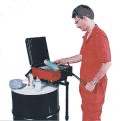
- Material Composition: Heavy-duty structural steel frames with reinforced plating.
- Size/Capacity Range: Units for aerosol cans, 5-gallon pails, and 55-gallon steel drums.
- Compliance/Ratings: OSHA-compliant safety guarding and CE-certified electrical components.
- Closure/Action Types: Hydraulic RAM, manual lever-arm, and pneumatic compression.

| Product Name | Primary Function | Target Container Size |
|---|---|---|
| Drum Crusher – Industrial 55 Gallon | High-force hydraulic flattening | 55-Gallon Steel Drums |
| AeroVent Can Recycling System | Puncturing and VOC filtration | Standard Aerosol Cans |
| Can & Pail Crusher – Big Squeeze | Volume reduction of small containers | 5-Gallon Pails / 1-Gallon Cans |
| Pack-Master™ Trash Compactors | In-drum waste compression | Open-head 55-Gallon Drums |
| High Volume Can & Pail Crusher | Continuous industrial processing | Multi-size Cans and Pails |
Technical Equipment Configurations Industrial volume reduction equipment is categorized by its primary mechanical action: crushing or compacting. Drum crushers are designed to flatten empty metal containers—such as steel barrels or pails—into thin wafers, typically achieving a 6:1 or 8:1 reduction ratio. Conversely, trash compactors like the Pack-Master™ are engineered to compress loose waste materials directly into a secondary container, such as an open-head 55-gallon drum. Specialized units, such as the AeroVent system, incorporate a puncturing mechanism and carbon filtration to safely depressurize aerosol cans, converting hazardous waste into recyclable scrap metal while capturing volatile organic compounds (VOCs).
Material Durability and Construction The structural integrity of drum crushers is maintained through the use of cold-rolled structural steel and reinforced welding. The compression plates, or "platens," are manufactured from high-tensile steel to prevent warping under the extreme pressures exerted by hydraulic cylinders, which can exceed 30,000 pounds of force. Hydraulic systems utilize industrial-grade pumps and cylinders with chrome-plated rods to resist corrosion and wear. For environments handling corrosive residues, certain components may feature chemical-resistant powder coatings or epoxy finishes to extend the service life of the machine frame and safety enclosures.
Regulatory Standards and Safety Compliance Operating industrial crushers requires adherence to OSHA 1910.212 regarding general requirements for all machines. This includes the implementation of safety interlocks that prevent the hydraulic RAM from descending if the chamber door is open. Furthermore, equipment used for hazardous waste, such as aerosol cans, must comply with EPA and DOT regulations concerning the disposal of pressurized vessels. Systems that puncture and drain cans help facilities qualify for "RCRA-empty" status, allowing the metal to be managed as non-hazardous scrap rather than hazardous waste, thereby reducing regulatory oversight and disposal costs.
Industrial Applications and Sector Utility Drum crushers and compactors are utilized across diverse sectors to manage the byproduct of high-volume operations. In the chemical and coatings industry, these machines process empty 5-gallon pails and 55-gallon drums that previously held resins or solvents. Agricultural facilities utilize pails and can crushers to manage fertilizer and pesticide containers. In general manufacturing and warehousing, in-drum compactors are used to maximize the density of shipping room waste or textile scraps. By reducing the frequency of waste pickups, these sectors decrease their carbon footprint and logistical expenditures.
Technical Selection Criteria Selecting the appropriate compaction equipment depends on the specific container geometry and the required cycle time. Buyers must evaluate the cycle speed—measured in seconds per stroke—to ensure the unit meets the facility's daily throughput requirements. Power source compatibility is also critical; units are available in single-phase or three-phase electrical configurations, as well as pneumatic versions for explosion-proof environments where electrical sparking is a hazard. Additionally, the inclusion of liquid collection trays is necessary when crushing containers that may retain residual fluids, ensuring a clean and compliant workspace.

