


Round Bottom Drum Liners | 5 to 55 Gallon
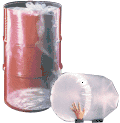
- Material Composition: LDPE, hot-fill liner materials, and chemical-resistant CR liner materials.
- Size/Capacity Range: Designed for 5-gallon, 15-gallon, 30-gallon, and 55-gallon drums and pails.
- Compliance/Ratings: Hot-fill options for elevated-temperature filling and CR options for chemical-resistant applications.
- Closure Types: Tie-top and fold-back round bottom liner configurations.
- Product Types: Round bottom flexible liners, tie-top liners, fold-back liners, hot-fill liners, CR liners, and heavy-gauge LDPE liners.

$679.95
$576.00
(You Save -18%)$229.95
$254.00
(You Save 9%)$699.95
$739.95
(You Save 5%)$332.95
$404.95
(You Save 18%)$619.95
$715.00
(You Save 13%)$363.95
$450.00
(You Save 19%)$1,109.95
$1,309.95
(You Save 15%)$987.95
$1,087.95
(You Save 9%)$246.95
$290.95
(You Save 15%)$426.95
$506.95
(You Save 16%)$327.95
$427.95
(You Save 23%)$509.95
$657.00
(You Save 22%)
Product Comparison Chart
Tie-Top and Fold-Back Round Bottom Configurations Round bottom drum liners are configured to follow the curved base of drums and pails more closely than flat-bottom liners. This shape helps reduce folds at the lower corners of the container and limits areas where material can become trapped. Tie-top liners include extra material that can be gathered and tied after filling, making them useful for disposal, transport inside a secondary container, or contained removal. Fold-back liners are designed to fold over the drum rim during filling or mixing, helping keep the liner open and reducing pull-down into the container. Capacity options include 5, 15, 30, and 55 gallons.
LDPE, Hot-Fill, CR, and Gauge Selection LDPE round bottom liners provide flexibility, moisture resistance, and compatibility with many liquids, powders, semi-solids, and waste materials. The material conforms to the drum shape and can be removed after use to reduce container cleaning. Thickness options from 4 mil to 10 mil affect puncture resistance, liner weight, and removal strength. Four mil liners are used for lighter-duty handling, while 8 mil and 10 mil liners are used where heavier materials, sharper residues, or more handling stress are expected. Hot-fill liners are selected for elevated-temperature contents, while CR liners are used where added chemical resistance is required.
Chemical Compatibility and Handling Requirements Round bottom liners should be selected based on the contents being stored, mixed, or discarded. Chemical-resistant CR liners may be required where standard LDPE is not compatible with the material. Hot-fill liners should be reviewed against fill temperature, cooling conditions, and the container’s temperature tolerance. If liners are used with regulated chemicals, coatings, solvents, adhesives, food ingredients, or waste materials, the used liner may need to be handled according to facility disposal procedures. Food, chemical, and industrial operations should review safety data sheets, internal sanitation rules, residue classification, and container compatibility before selecting a liner style.
Use Across Chemical, Food, Manufacturing, and Waste Operations Round bottom drum liners are used in chemical processing, food handling, manufacturing, paint and coatings work, adhesives production, pharmaceutical operations, and waste management. Chemical facilities use liners to reduce residue buildup and protect reusable drums from direct material contact. Food and ingredient operations use liners for powders, syrups, oils, and other bulk materials where cleaner handling is needed. Paint and coatings operations use liners during mixing, batching, and disposal to reduce cleanup time. Waste operations use tie-top and heavier-gauge liners for contained removal. Hot-fill and CR liner options support applications where temperature or chemical exposure exceeds general-use liner requirements.
Technical Factors for Buyers Buyers should first match liner capacity to the container, including 5-gallon, 15-gallon, 30-gallon, and 55-gallon sizes. The next factor is closure style. Tie-top liners are used when the liner must be gathered and secured after use, while fold-back liners are used when the liner must remain open around the drum rim during filling or mixing. Material and thickness should be selected based on contents, fill weight, puncture risk, and removal method. LDPE is used for general applications, hot-fill liners for elevated-temperature filling, and CR liners for compatible chemical-resistant use. Buyers should also review drum shape, fill temperature, residue classification, disposal method, and pack quantity before ordering.
| Product | Capacity | Closure Style | Material / Thickness | Application |
|---|---|---|---|---|
| Tie-Top, 5 Gallon, LDPE, 4 mil Round Bottom Flexible Liners, 400 Pack | 5 gallon | Tie-top | LDPE / 4 mil | Small pail lining for liquids, powders, and light-duty material handling |
| Tie-Top, 15 Gallon, LDPE, 4 mil - Round Bottom Flexible Liners, 100 Pack | 15 gallon | Tie-top | LDPE / 4 mil | Intermediate drum lining for storage, disposal, and general product protection |
| Fold-Back, 15 Gallon, 5 mil - Round Bottom Flexible Liners, 150 Pack | 15 gallon | Fold-back | 5 mil | Intermediate drum lining where the liner must fold over the rim during filling |
| Fold-Back, 30 Gallon, LDPE, 4 mil - Round Bottom Liners, 100 Pack | 30 gallon | Fold-back | LDPE / 4 mil | 30-gallon drum protection for powders, liquids, and bulk materials |
| Fold-Back, 55 Gallon, LDPE, Round Bottom Flexible Liners, 150 Pack | 55 gallon | Fold-back | LDPE | High-quantity 55-gallon drum lining for production and waste handling |
| Tie-Top, 55 Gallon, LDPE, 4 mil - Round Bottom Liners, 100 Pack | 55 gallon | Tie-top | LDPE / 4 mil | 55-gallon liner use where the liner must be closed or secured after filling |
| Fold-Back, 55 Gallon, Hot Fill, 4 mil - Round Bottom Flexible Liners, 100 Pack | 55 gallon | Fold-back | Hot-fill / 4 mil | Elevated-temperature filling and controlled drum lining applications |
| Fold-Back, 55 Gallon, CR, 5 mil - Round Bottom Flexible Liners 100 Pack | 55 gallon | Fold-back | CR / 5 mil | Chemical-resistant lining for compatible industrial materials |
| Fold-Back, 55 Gallon, LDPE, 8 mil Round Bottom Flexible Liners, 50 Pack | 55 gallon | Fold-back | LDPE / 8 mil | Heavier-gauge 55-gallon lining for increased puncture resistance |
| Tie-Top, 55 Gallon, LDPE, 8 mil - Round Bottom Flexible Liners 50 Pack | 55 gallon | Tie-top | LDPE / 8 mil | Heavier-gauge tie-top lining for storage, disposal, and material containment |
| Fold-Back, 55 Gallon, LDPE, 10 mil - Round Bottom Flexible Liners 50 Pack | 55 gallon | Fold-back | LDPE / 10 mil | Heavy-gauge liner use for demanding drum handling and removal conditions |
| Tie-Top, 55 Gallon, LDPE, 10 mil - Round Bottom Flexible Liners 50 Pack | 55 gallon | Tie-top | LDPE / 10 mil | Heavy-gauge tie-top drum lining for containment, disposal, and industrial use |
Tie-Top and Fold-Back Round Bottom Configurations Round bottom drum liners are configured to follow the curved base of drums and pails more closely than flat-bottom liners. This shape helps reduce folds at the lower corners of the container and limits areas where material can become trapped. Tie-top liners include extra material that can be gathered and tied after filling, making them useful for disposal, transport inside a secondary container, or contained removal. Fold-back liners are designed to fold over the drum rim during filling or mixing, helping keep the liner open and reducing pull-down into the container. Capacity options include 5, 15, 30, and 55 gallons.
LDPE, Hot-Fill, CR, and Gauge Selection LDPE round bottom liners provide flexibility, moisture resistance, and compatibility with many liquids, powders, semi-solids, and waste materials. The material conforms to the drum shape and can be removed after use to reduce container cleaning. Thickness options from 4 mil to 10 mil affect puncture resistance, liner weight, and removal strength. Four mil liners are used for lighter-duty handling, while 8 mil and 10 mil liners are used where heavier materials, sharper residues, or more handling stress are expected. Hot-fill liners are selected for elevated-temperature contents, while CR liners are used where added chemical resistance is required.
Chemical Compatibility and Handling Requirements Round bottom liners should be selected based on the contents being stored, mixed, or discarded. Chemical-resistant CR liners may be required where standard LDPE is not compatible with the material. Hot-fill liners should be reviewed against fill temperature, cooling conditions, and the container’s temperature tolerance. If liners are used with regulated chemicals, coatings, solvents, adhesives, food ingredients, or waste materials, the used liner may need to be handled according to facility disposal procedures. Food, chemical, and industrial operations should review safety data sheets, internal sanitation rules, residue classification, and container compatibility before selecting a liner style.
Use Across Chemical, Food, Manufacturing, and Waste Operations Round bottom drum liners are used in chemical processing, food handling, manufacturing, paint and coatings work, adhesives production, pharmaceutical operations, and waste management. Chemical facilities use liners to reduce residue buildup and protect reusable drums from direct material contact. Food and ingredient operations use liners for powders, syrups, oils, and other bulk materials where cleaner handling is needed. Paint and coatings operations use liners during mixing, batching, and disposal to reduce cleanup time. Waste operations use tie-top and heavier-gauge liners for contained removal. Hot-fill and CR liner options support applications where temperature or chemical exposure exceeds general-use liner requirements.
Technical Factors for Buyers Buyers should first match liner capacity to the container, including 5-gallon, 15-gallon, 30-gallon, and 55-gallon sizes. The next factor is closure style. Tie-top liners are used when the liner must be gathered and secured after use, while fold-back liners are used when the liner must remain open around the drum rim during filling or mixing. Material and thickness should be selected based on contents, fill weight, puncture risk, and removal method. LDPE is used for general applications, hot-fill liners for elevated-temperature filling, and CR liners for compatible chemical-resistant use. Buyers should also review drum shape, fill temperature, residue classification, disposal method, and pack quantity before ordering.

