


Heavy-Duty Magnets | Tool-Free Mounting Hardware
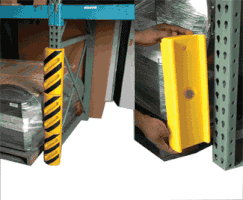
- Material Composition: Magnetic assembly for ferrous metal mounting surfaces.
- Size/Capacity Range: Single-piece magnetic mounting units.
- Compliance/Ratings: Application-dependent holding force and surface compatibility.
- Closure Types: Non-penetrating magnetic attachment; no mechanical fastener closure.

| Buy More, Save More! | ||
|---|---|---|
| Quantity | Price Each | |
| 1 - 11 pieces | $49.95 ea. | |
| 12+ pieces | $42.50 ea. | |
Product Comparison Chart
Configuration Analysis
Heavy-duty magnetic mounts use direct magnetic force to hold equipment, signs, guards, fixtures, or accessories against ferrous substrates. Unlike bolt-on hardware, magnetic mounting does not require holes or threaded inserts. This configuration supports quick installation and repositioning, especially on machinery frames, steel shelving, vehicles, panels, and temporary workstations.
Material Engineering
Magnetic mounting performance depends on magnet grade, housing material, contact area, and the condition of the steel surface. Painted, coated, curved, oily, or uneven surfaces can reduce holding force. Flat steel surfaces generally provide greater contact efficiency than thin sheet metal or textured substrates.
Regulatory Standards
Magnetic mounts are typically evaluated by holding force, load direction, and installation environment rather than container-style UN or DOT ratings. For workplace use, buyers should consider OSHA-related equipment security requirements when magnets support safety signs, guards, or operational accessories.
Industrial Applications
Heavy-duty magnets are used in warehouses, manufacturing facilities, maintenance departments, fleet operations, metal fabrication areas, and temporary jobsite installations. Common uses include mounting signage, lights, sensors, brackets, guards, labels, and removable accessories.
Selection Criteria
Buyers should review the weight of the mounted item, shear load, pull-off direction, vibration, temperature, corrosion exposure, and surface compatibility. Magnetic mounting should be tested under actual operating conditions before use near moving equipment or overhead positions.
| Product | Mounting Type | Installation Method | Compatible Surface | Primary Use |
|---|---|---|---|---|
| Heavy-Duty Magnet | Magnetic | Tool-Free Attachment | Ferrous Metal Surfaces | Quick Installation and Repositioning |
Configuration Analysis
Heavy-duty magnetic mounts use direct magnetic force to hold equipment, signs, guards, fixtures, or accessories against ferrous substrates. Unlike bolt-on hardware, magnetic mounting does not require holes or threaded inserts. This configuration supports quick installation and repositioning, especially on machinery frames, steel shelving, vehicles, panels, and temporary workstations.
Material Engineering
Magnetic mounting performance depends on magnet grade, housing material, contact area, and the condition of the steel surface. Painted, coated, curved, oily, or uneven surfaces can reduce holding force. Flat steel surfaces generally provide greater contact efficiency than thin sheet metal or textured substrates.
Regulatory Standards
Magnetic mounts are typically evaluated by holding force, load direction, and installation environment rather than container-style UN or DOT ratings. For workplace use, buyers should consider OSHA-related equipment security requirements when magnets support safety signs, guards, or operational accessories.
Industrial Applications
Heavy-duty magnets are used in warehouses, manufacturing facilities, maintenance departments, fleet operations, metal fabrication areas, and temporary jobsite installations. Common uses include mounting signage, lights, sensors, brackets, guards, labels, and removable accessories.
Selection Criteria
Buyers should review the weight of the mounted item, shear load, pull-off direction, vibration, temperature, corrosion exposure, and surface compatibility. Magnetic mounting should be tested under actual operating conditions before use near moving equipment or overhead positions.

