


Ductile Iron Drum Deheader | Manual Drum Opening Tool
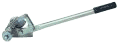
- Material Composition: Ductile iron body with replaceable cutting blade; optional non-sparking blade for flammable vapor areas.
- Use Range: Manual deheading for low-volume drum opening, up to 10 drums per week.
- Compliance/Ratings: Use in accordance with OSHA workplace safety procedures, DOT container handling rules, and site-specific hazardous material controls.
- Closure Types: Used to remove sealed drum heads from steel drums; compatible with manual top-removal applications.
- Operation Type: Hand-operated drum-opening tool; no electric or pneumatic power source required.

$249.98
$275.00
(You Save 9%)
Product Comparison Chart
Configuration Analysis The ductile iron drum deheader is configured for manual removal of drum heads from steel drums. The tool is positioned at the top edge of the drum, where the cutting blade engages the metal head near the chime. The operator advances the tool around the drum circumference to separate the head from the drum body. This configuration is suited for low-volume work where powered drum-opening equipment is not required. Manual deheaders are commonly used where a facility opens drums occasionally for cleaning, inspection, disposal preparation, or material recovery. For frequent daily drum processing, powered or bench-mounted drum-opening systems may be more suitable.
Material Engineering Ductile iron is used for the tool body because it provides higher impact resistance and mechanical strength than standard gray cast iron. This allows the tool frame to withstand repeated cutting pressure during drum-head removal. The cutting blade is the primary wear component and should be checked for dullness, chips, edge deformation, or uneven cutting. A worn blade may tear the drum head instead of producing a controlled cut. Replacement blades allow the tool to remain in service after the original blade loses cutting efficiency. Where flammable vapors may be present, a non-sparking blade or non-ferrous cutting wheel should be used instead of a standard blade.
Regulatory Standards Drum deheading must be performed under controlled workplace safety procedures. Drums that held chemicals, fuels, solvents, oils, adhesives, or unknown materials may contain vapors, residue, pressure, or reactive substances. Before opening a drum, the user should identify the prior contents, review the Safety Data Sheet, relieve internal pressure when required, and confirm that the drum is safe to open. DOT rules may apply to drums used for regulated material transport, while OSHA requirements may apply to employee protection, fire prevention, hazard communication, and personal protective equipment. A standard drum deheader should not be used on drums that may contain flammable vapors because impact or friction can create an ignition hazard.
Industrial Applications Manual drum deheaders are used in manufacturing plants, maintenance shops, chemical handling facilities, agricultural operations, waste management sites, and drum reconditioning areas. They are used when workers need direct access to a drum interior for cleaning, scraping, inspection, residue removal, or conversion of empty drums for secondary use. In waste handling, a deheader may be used after hazard review to open compatible non-pressurized drums for consolidation or disposal preparation. In industrial maintenance, the tool may be used to remove drum heads from empty containers that are being prepared for scrap, collection, or internal cleaning. Food, chemical, and agricultural facilities may require separate tools or blade materials depending on contamination and vapor-control requirements.
Selection Criteria Buyers should select a ductile iron drum deheader based on drum material, work volume, blade type, vapor hazard, and maintenance requirements. For occasional use, a hand-operated model is appropriate for low-volume drum opening. For drums that may contain flammable vapors, a non-sparking blade or non-ferrous cutting wheel is required. For general steel drum opening, a standard blade may be used only when the drum is confirmed safe and free of ignition hazards. Replacement blade availability is also important because cutting performance depends on blade condition. Operators should avoid opening bulging, pressurized, unidentified, or chemically unstable drums without a formal safety review.
| Product | Material | Operation Type | Use Range | Blade Type | Primary Use |
|---|---|---|---|---|---|
| Ductile Iron Drum Deheader | Ductile iron frame with cutting blade | Manual hand-operated | Up to 10 drums per week | Standard blade; non-sparking option available | Removing top heads from steel drums |
| Replacement Blade - Ductile Iron Drum Deheader | Replacement cutting blade | Component part | For compatible ductile iron deheader | Replacement blade | Restoring cutting performance after blade wear |
Configuration Analysis The ductile iron drum deheader is configured for manual removal of drum heads from steel drums. The tool is positioned at the top edge of the drum, where the cutting blade engages the metal head near the chime. The operator advances the tool around the drum circumference to separate the head from the drum body. This configuration is suited for low-volume work where powered drum-opening equipment is not required. Manual deheaders are commonly used where a facility opens drums occasionally for cleaning, inspection, disposal preparation, or material recovery. For frequent daily drum processing, powered or bench-mounted drum-opening systems may be more suitable.
Material Engineering Ductile iron is used for the tool body because it provides higher impact resistance and mechanical strength than standard gray cast iron. This allows the tool frame to withstand repeated cutting pressure during drum-head removal. The cutting blade is the primary wear component and should be checked for dullness, chips, edge deformation, or uneven cutting. A worn blade may tear the drum head instead of producing a controlled cut. Replacement blades allow the tool to remain in service after the original blade loses cutting efficiency. Where flammable vapors may be present, a non-sparking blade or non-ferrous cutting wheel should be used instead of a standard blade.
Regulatory Standards Drum deheading must be performed under controlled workplace safety procedures. Drums that held chemicals, fuels, solvents, oils, adhesives, or unknown materials may contain vapors, residue, pressure, or reactive substances. Before opening a drum, the user should identify the prior contents, review the Safety Data Sheet, relieve internal pressure when required, and confirm that the drum is safe to open. DOT rules may apply to drums used for regulated material transport, while OSHA requirements may apply to employee protection, fire prevention, hazard communication, and personal protective equipment. A standard drum deheader should not be used on drums that may contain flammable vapors because impact or friction can create an ignition hazard.
Industrial Applications Manual drum deheaders are used in manufacturing plants, maintenance shops, chemical handling facilities, agricultural operations, waste management sites, and drum reconditioning areas. They are used when workers need direct access to a drum interior for cleaning, scraping, inspection, residue removal, or conversion of empty drums for secondary use. In waste handling, a deheader may be used after hazard review to open compatible non-pressurized drums for consolidation or disposal preparation. In industrial maintenance, the tool may be used to remove drum heads from empty containers that are being prepared for scrap, collection, or internal cleaning. Food, chemical, and agricultural facilities may require separate tools or blade materials depending on contamination and vapor-control requirements.
Selection Criteria Buyers should select a ductile iron drum deheader based on drum material, work volume, blade type, vapor hazard, and maintenance requirements. For occasional use, a hand-operated model is appropriate for low-volume drum opening. For drums that may contain flammable vapors, a non-sparking blade or non-ferrous cutting wheel is required. For general steel drum opening, a standard blade may be used only when the drum is confirmed safe and free of ignition hazards. Replacement blade availability is also important because cutting performance depends on blade condition. Operators should avoid opening bulging, pressurized, unidentified, or chemically unstable drums without a formal safety review.

